· Cities & Capitals · 5 min read ·
Veliky Novgorod: The Medieval Republic on the Volkhov River
Governed by a popular assembly and enriched by Hanseatic trade, medieval Veliky Novgorod built a literate merchant republic on the Volkhov River.
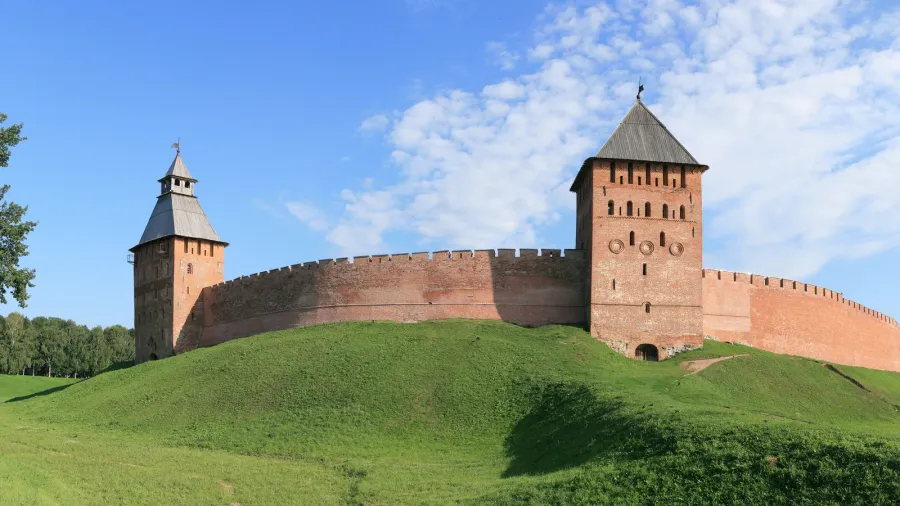
Where the wide currents of the Volkhov River drain northward from Lake Ilmen toward Lake Ladoga, Veliky Novgorod preserves the physical and institutional memory of an alternative medieval civilization. While early medieval principalities across Eastern Europe developed around centralized hereditary monarchies, Novgorod pioneered an expansive urban commonwealth. Between 1136 and 1478, the Novgorod Republic governed vast northern territories stretching from the Baltic Sea to the Ural Mountains, anchored by civic assemblies, international maritime commerce, and widespread vernacular literacy.
The geographical position of the city formed the foundation of its autonomy. Situated at the crossroads of the river networks linking Northern Europe with Byzantium and the Caspian basin, Novgorod flourished as the easternmost trade partner of the Hanseatic League. The Volkhov River naturally divided the settlement into two complementary halves: the administrative and ecclesiastical Sophia Side on the western bank, and the mercantile Commercial Side on the eastern bank. This geographic duality mirrored the constitutional equilibrium that defined the city for more than three centuries.
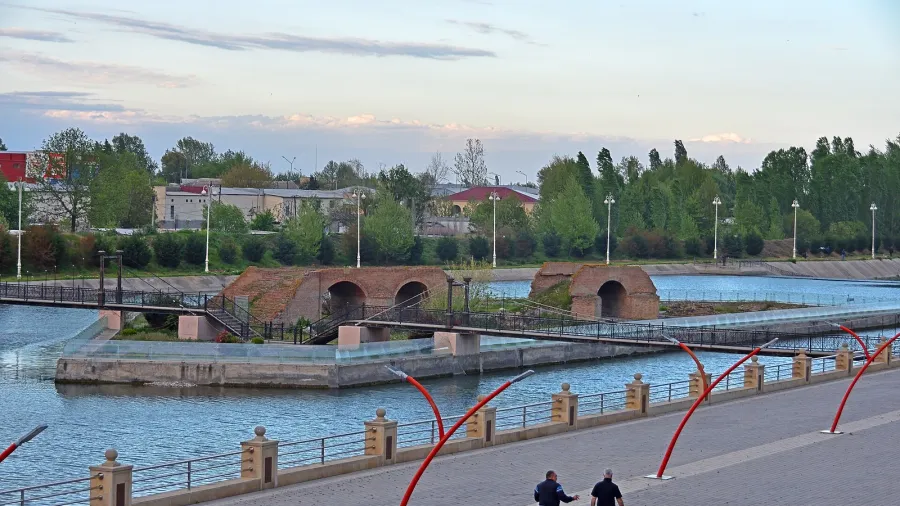
 Figure 1: The medieval fortified Kremlin (Detinets) of Veliky Novgorod, rising above the western embankment of the Volkhov River.
The Veche and Republican Governance
The political system of medieval Novgorod represented a radical departure from contemporary European feudalism. Following an uprising in 1136 that expelled Prince Vsevolod Mstislavich for neglecting civic duties, sovereign authority resided formally in the Veche, a popular assembly of citizens. Meeting in the court of Yaroslav on the Commercial Side, the sound of the great assembly bell summoned property-owning burghers to elect executive officials, enact commercial legislation, and decide matters of peace and regional alliances.
Executive administration rested in the hands of the posadnik, an elected civil mayor chosen from prominent patrician families, and the tysyatsky, a military leader representing urban trade guilds. The citizens retained a prince primarily as a hired military commander and supreme judicial arbiter. Before assuming office, every prince signed a legally binding contract known as a ryad, which prohibited him from owning land within the republic’s territory, appointing magistrates unilaterally, or collecting taxes without the approval of the posadnik. If a ruler violated these contractual obligations, the Veche reserved the constitutional right to dismiss him from the city.
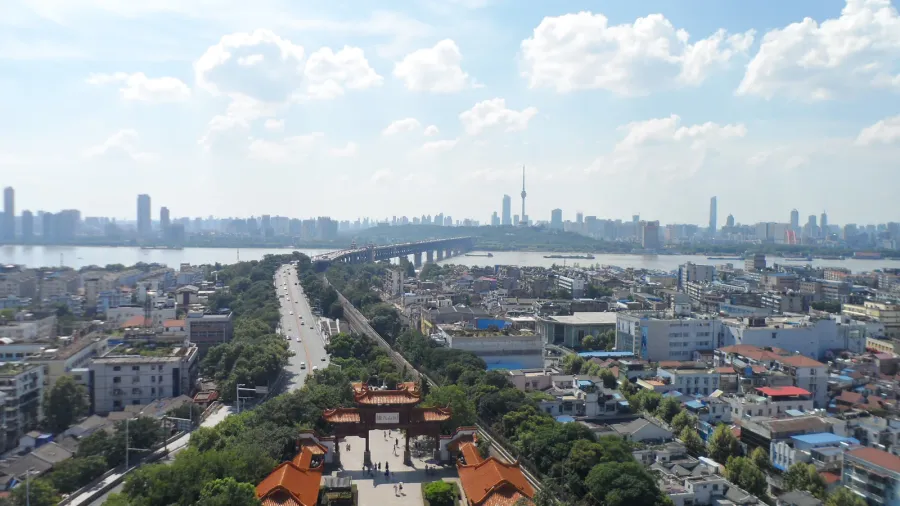
 Figure 2: Historical plan of medieval Novgorod showing the dual division between the Sophia Side and the Commercial Side, home to the Hanseatic League’s Peterhof kontor.
The Hanseatic Kontor and Everyday Literacy
Economic prosperity in Novgorod depended on its integration into Baltic maritime networks. German merchants established two permanent trading yards in the city: the Gotenhof, founded by sailors from Gotland, and the Peterhof, established around the Church of Saint Peter. As one of the four official foreign offices (kontors) of the Hanseatic League, alongside London, Bruges, and Bergen, the Peterhof operated under special legal charters that regulated commercial disputes, currency exchange, and warehousing. Western merchants exchanged silver bullion, Flemish cloth, Baltic herring, and salt for prime northern commodities, predominantly sable and squirrel furs, alongside pure beeswax used in European churches.
Beneath the commercial records lies one of medieval archaeology’s most extraordinary discoveries: the birch bark manuscripts (beresty). First excavated in 1951 by archaeologist Artemiy Artsikhovsky, the waterlogged, oxygen-deprived clay soils of Novgorod preserved over one thousand inscribed strips of birch bark dating from the eleventh through the fifteenth centuries. Written in early Old East Slavic using a sharp metal or bone stylus, these personal letters, business ledgers, promissory notes, and children’s school exercises reveal that literacy was not confined to monastic scriptoriums. Common artisans, merchants, and independent women routinely corresponded about debts, livestock sales, family affairs, and domestic travel.
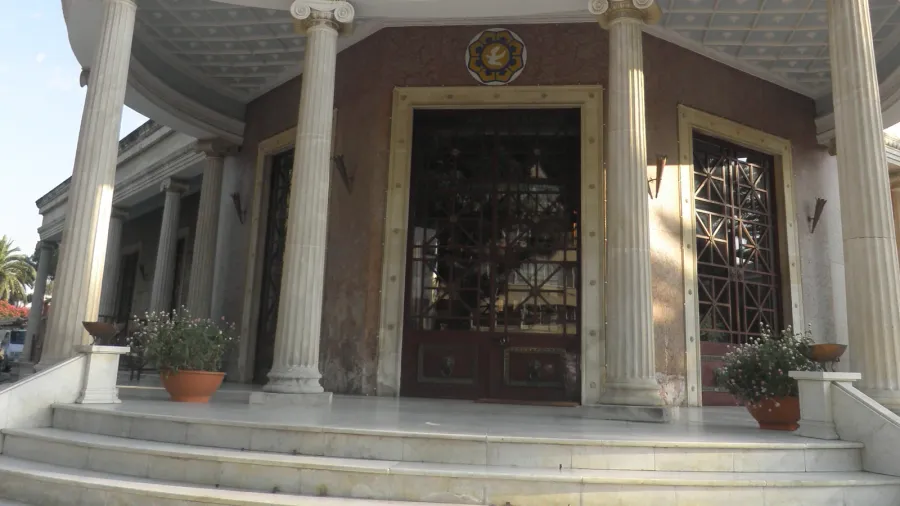
 Figure 3: The Church of the Transfiguration on Ilyina Street, celebrated for its 1378 interior wall frescoes painted by master iconographer Theophanes the Greek.
Monumental Stone and Byzantine Artistry
The architectural landscape of Novgorod reflected its wealth and civic independence. On the high western bank rises the Detinets, or Kremlin, encircled by red brick ramparts and defensive bastions. Within its walls stands the Cathedral of Saint Sophia, erected between 1045 and 1050 under Prince Vladimir of Novgorod. With its monumental whitewashed limestone masonry, towering central dome, and ancient bronze Magdeburg doors cast in Saxony, Saint Sophia served as the spiritual sanctuary of the commonwealth, housing the municipal archives and the treasury.
During the fourteenth century, flourishing trade spurred a wave of neighborhood church construction financed by merchant cooperatives (skladchiny). On the Commercial Side, the Church of the Transfiguration on Ilyina Street, completed in 1374, stands as an exemplar of the distinctive local architectural school, featuring steep gables and decorative brickwork. In 1378, the Byzantine master Theophanes the Greek adorned its interior dome and walls with expressive, monochromatic frescoes of hermits and prophets, executed with dynamic brushwork that influenced generations of icon painters across the continent.
 Figure 4: The white stone cathedrals of the Yuriev Monastery, founded in the 11th century to guard the river approach south of the city.
The Continuity of an Architectural Sanctuary
The political autonomy of the Novgorod Republic concluded in 1478 when Grand Prince Ivan III incorporated the territory into the expanding Grand Duchy of Moscow, removing the historic Veche bell to symbolize the end of republican municipal rights. Yet while administrative sovereignty shifted elsewhere, the physical fabric of the city remained remarkably intact through subsequent centuries, escaping the heavy industrial redevelopment that altered other regional centers.
In 1992, UNESCO inscribed the Historic Monuments of Novgorod and Surroundings on the World Heritage List, recognizing dozens of surviving medieval churches, monastic complexes such as the Yuriev Monastery, and the intact archaeological layers of the urban center. In 1999, official legislation restored the historical prefix Veliky (“Great”) to the municipal name. Today, Veliky Novgorod remains an open-air archive of civic republicanism, international trade networks, and early European literacy preserved along the banks of the Volkhov.