· Cities & Capitals · 6 min read ·
Port of Tornio: The Arctic Gateway Powering Europe's Steel Supply
At the frozen edge of the Bothnian Bay, Finland's Port of Tornio moves millions of tons of steel year-round through ice-choked subarctic sea lanes.
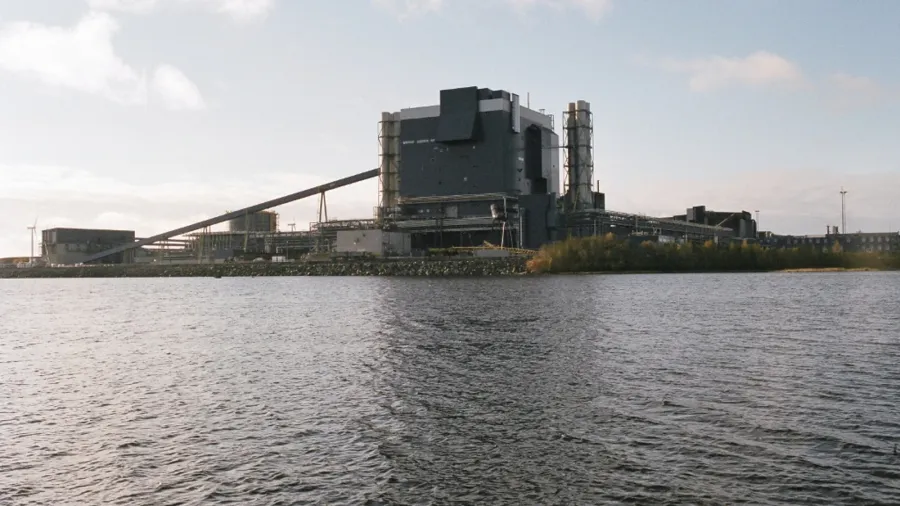
On the low-lying island of Röyttä, just south of the Arctic Circle, maritime commerce meets one of the most demanding marine environments in Europe. Here, at sixty-five degrees north latitude, the Port of Tornio operates as the northernmost commercial shipping terminal in Finland. The port sits at the head of the Bothnian Bay, where fresh river discharge dilutes salinity to less than one-third of normal seawater. When polar winter descends across Fennoscandia, this brackish surface freezes rapidly into sheets of dense pack ice. Yet through six months of relentless winter freeze, freighters continue to arrive, load, and depart without pause.
The port is known officially in Finnish as Tornion satama and in Swedish as Torneå hamn, though regional maritime operators frequently refer to it simply as Röyttä. Its geographic position places it on the periphery of Lapland, within sight of the Swedish border along the Torne River. Despite its remote subarctic coordinate, the terminal ranks among the most productive freight hubs in the Nordic region, recording an international cargo throughput of approximately 3.0 million metric tons per year.
Operating at this latitude requires an uncommon logistical foundation. Unlike traditional multipurpose urban docks that handle consumer parcel freight or passenger ferries, Tornio functions primarily as a dedicated industrial artery. Outokumpu Shipping manages the port operations, directing maritime traffic that sustains the neighboring Outokumpu stainless steel mill, an industrial complex that ranks among the largest manufacturing centers of its kind on earth.
 Figure 1: Timber loading and early cargo operations at the Röyttä harbor facilities in Tornio during the mid-twentieth century.
The development of the modern harbor reflects the economic transformation of northern Scandinavia during the twentieth century. For centuries, the regional economy centered on riverine fishing, forestry, and seasonal cross-border livestock trading between the Finns, Swedes, and indigenous Sámi populations. Early trading ships called at seasonal moorings closer to the town center of Tornio, but post-glacial land uplift gradually pushed shallow coastal seabeds upward, reducing water depths along the river estuary.
As commercial vessels grew in scale and draft, the shallow estuarine waters could no longer accommodate merchant shipping. Regional authorities shifted port activity ten kilometers south to Röyttä island, where deeper natural channels met the open waters of the Bothnian Bay. By the mid-twentieth century, timber, sawn wood, and paper pulp dominated the loading wharves. Long wooden jetties and steam cranes received cargo barges from sawmills scattered across the Lapland interior, providing northern forest products with direct access to European markets.
The character of the port changed permanently in the late 1960s with the discovery of substantial chromite deposits at nearby Elijärvi in Kemi. Finnish industrial planners recognized that domestic chrome ore could provide the foundation for a fully integrated stainless steel production chain. Outokumpu constructed its Tornio Works adjacent to the Röyttä harbor, establishing an industrial facility that combined smelting, rolling, and coastal shipping into a unified geographic zone.
 Figure 2: The general cargo vessel Eemshorn docked amidst dense Bothnian Bay sea ice at Röyttä.
Today, the port operates on a finely balanced import and export cycle. Approximately half of the three million tons handled annually consists of incoming raw materials: recycled stainless steel scrap collected from across Europe, lime, coke, ferroalloys, and industrial minerals required for electric arc furnace processing. The remaining half departs as finished austenitic and ferritic stainless steel products, transported on dedicated roll-on roll-off and bulk vessels bound for distribution hubs in the Netherlands, Germany, and Great Britain.
Maintaining this flow demands exceptional navigational engineering. The Port of Tornio maintains a maximum draft depth of 9.0 meters (29.5 feet), allowing handysize bulk carriers and specialized ice-strengthened cargo vessels to berth alongside its 44,000 square meters of dock facilities. The approaches to Tornio share an outer shipping fairway with the neighboring Port of Kemi, requiring close coordination between pilots, port captains, and the Finnish Transport Infrastructure Agency.
Winter introduces the primary operational obstacle. Between November and May, the Bothnian Bay freezes over completely, accumulating landfast ice near the shoreline and mobile drift ice across outer navigational lanes. Prevailing winds compress drifting floes into towering pressure ridges that can exceed ten meters in vertical thickness, capable of halting conventional commercial shipping.
 Figure 3: Heavy icebreakers maintain commercial fairways through the frozen Bothnian Bay to ensure year-round navigation to Tornio.
To preserve continuity of trade, the Finnish state assigns specialized diesel-electric icebreakers from its national fleet to patrol the fairway. Vessels destined for Tornio must comply with strict ice-class structural rules, requiring reinforced hull plates, high engine output, and ice-clearing hull geometries. Icebreakers cut channels through pack ice, escort merchant ships in convoys, and tow vessels that lose momentum in ridge zones.
The geopolitical geography of the port adds another distinct dimension. The terminal sits mere kilometers from the border town of Haparanda, Sweden, forming part of the integrated Tornio-Haparanda twin-city urban area. When the 1809 Treaty of Fredrikshamn severed Finland from the Kingdom of Sweden and ceded it to the Russian Empire, the frontier line followed the deepest channel of the Torne River. Today, this boundary functions as one of the most open international frontiers in Europe, permitting frictionless daily labor mobility and commercial coordination.
Freight movements through Tornio also link directly to the Finnish railway system, which operates on the broad 1,524 mm gauge. At the border yard in Tornio, tracks meet the standard 1,435 mm European gauge utilized by Sweden, making the regional transport hub an important transfer node for Eurasian and Scandinavian rail corridors. Raw timber and industrial consumables travel south from Swedish Lapland, while finished Finnish steel coils connect to northern rail links.
Environmental monitoring has become central to operations along the Bothnian Bay. The shallow, low-salinity ecosystem supports unique combinations of marine flora and freshwater fish, making the northern Baltic exceptionally sensitive to industrial pollution. The port and steelworks have invested heavily in enclosed conveyor systems, automated dust filtration, and modern ballast water treatment protocols to prevent the introduction of invasive species through foreign shipping.
Through careful navigation management and round-the-clock winter maintenance, the Port of Tornio demonstrates how extreme geography can be transformed into a vital hub of global manufacturing. Operating at the icy threshold of the subarctic, this Finnish terminal connects the heavy industrial resources of the polar north directly into the heart of modern international industry.