· Cities & Capitals · 7 min read ·
Barda: The Forgotten Imperial Capital of Caucasian Albania
Once the fortified capital of Caucasian Albania and Arran, Barda controlled medieval trade routes before a catastrophic 943 AD Viking raid shattered its power.
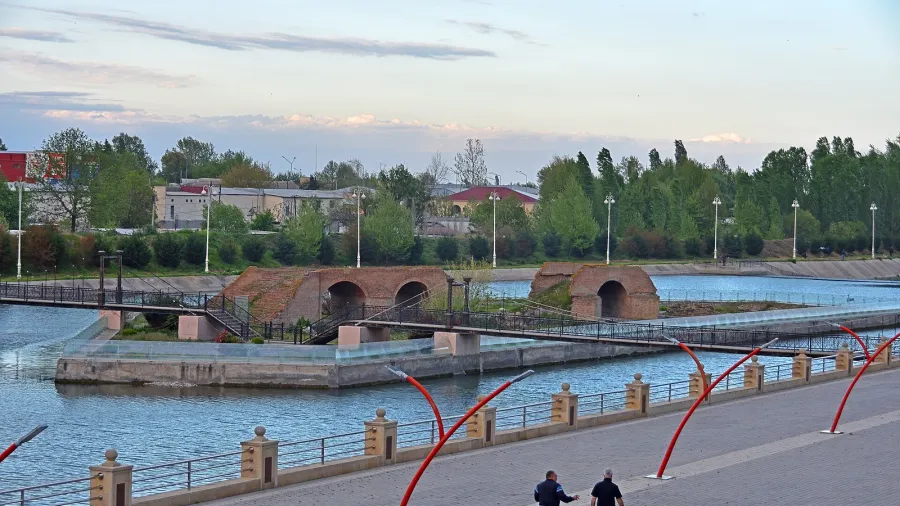
On the alluvial plains where the Tartar River discharges toward the Kura River, modern Barda appears as a quiet regional hub in central Azerbaijan. Irrigated cotton fields and orchards surround the perimeter, concealing the footprint of an ancient metropolis that once dictated politics from the Caspian Sea to the southern ridges of the Greater Caucasus. During the early Middle Ages, this ground supported Partav, the fortified capital of Caucasian Albania and later the administrative headquarters of the Islamic province of Arran.
Its geographic placement was calculated. Located roughly 250 kilometers west of Baku, the settlement commanded the primary east-west trade route linking the Caspian ports with Georgia and the Black Sea, while controlling river crossings between mountainous Karabakh and the northern steppes. Merchants transporting raw silk, dyed textiles, walnuts, and dried fruit met here to barter with caravans crossing from Persia into Derbent and the Khazar Khaganate.
The strategic corridor of the Tartar river
The geography of the Karabakh plain determined the settlement’s military and mercantile importance. The Tartar River flows northeast from the volcanic highlands of Kelbajar, carrying snowmelt and mineral-rich sediment across a wide alluvial cone before joining the Kura River. This constant water supply allowed engineers to construct complex canal networks across the arid lowland, transforming dry scrub into fertile agricultural land capable of sustaining an urban population of tens of thousands.
Unlike fortified mountain citadels that relied on steep cliffs for defense, Partav was designed as a classic riverine flatland metropolis. Surrounding earthworks, baked brick ramparts, and moat systems diverted from the Tartar created an extensive defensive ring. Control of the Tartar river crossings gave the city’s garrisons immediate authority over seasonal herd migrations and merchant routes traveling between the highland pastures and the winter grasslands along the Kura.
Foundation of Partav and royal Albania
Caucasian Albania originated as an ancient confederation of indigenous tribes indigenous to the eastern Transcaucasus. For centuries, its royal capital lay north at Kabala. By the late fifth century, strategic pressures from migrating nomadic confederations along the Eurasian steppe forced King Vache II to abandon the northern plains. Between 459 and 484 AD, under the reign of the Sasanian King of Kings Peroz I, the monarch rebuilt the southern outpost of Partav into the kingdom’s new primary capital, initially naming it Perozabad.
The city swiftly developed into the political and ecclesiastical core of Caucasian Albania. King Vachagan III the Pious convened landmark regional councils here, codifying civic and religious laws that unified the realm’s diverse ethnic populations. Within its massive defensive perimeter, stone basilicas stood alongside administrative palaces. Albanian historians chronicled the city as a center of scholarship, scriptoria, and theological debate, hosting the seat of the Albanian Catholicos who guided the regional church independently alongside neighboring Georgian and Armenian hierarchs.
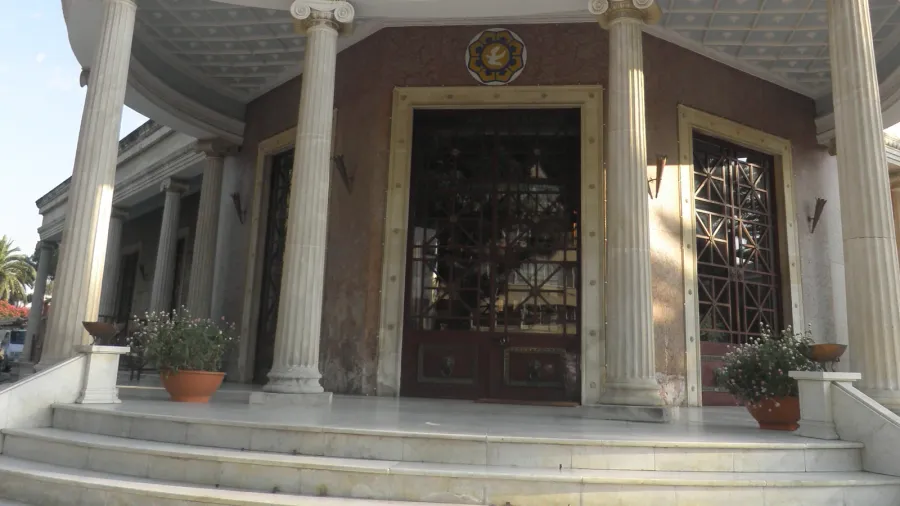
 Figure 1: The cylindrical red-brick Barda Mausoleum, completed in 1322 by architect Ahmad ibn Ayyub al-Hafiz Nakhchivani.
Sasanian imperial administrators stationed marzbans (provincial governors) within the city walls to monitor the northern frontier. Archaeological surveys reveal that Partav’s fortifications during this era incorporated monumental fired bricks bonded with gypsum mortar, forming walls wide enough for chariot patrols and military staging.
Commercial zenith of the Islamic Arran province
The Arab conquest of the southern Caucasus in the mid-seventh century altered the city’s geopolitical identity without diminishing its commercial status. Renamed Barda’a by Muslim geographers, the city was selected by the Umayyad and Abbasid caliphates as the administrative capital of Arran, the Islamic administrative unit spanning the lands between the Kura and Aras rivers.
Tenth-century Arab cartographers al-Istakhri and Ibn Hawqal visited Barda at its peak, recording extensive descriptions of its urban topography. They described a fortified city spanning more than three kilometers in diameter, entered through stone gateways named after regional destinations such as Tiflis and Derbent. Outside the inner citadel lay the renowned al-Kurki market, a massive bazaar district where merchants conducted business every Sunday.
 Figure 2: Exterior detail of the Barda tower showing turquoise glazed bricks repeating sacred calligraphy.
Barda served as the primary monetary and manufacturing engine of the region. The central mint struck silver dirhams and copper fals stamped with the name of Arran, circulating across trade corridors reaching Scandinavia and Central Asia. The city’s primary export was raw and woven silk, cultivated from mulberry groves fed by the Tartar canals. Contemporary accounts praise the quality of Barda silk, noting that it competed directly with Persian and Byzantine textiles in Mediterranean ports. In addition to textiles, specialized artisans exported madder dye, hazelnut timber, cured sturgeon, and glazed ceramics.
The Rus raid of 943 and urban collapse
The wealth concentrated inside Barda made it a target for external powers. In 943 AD, a fleet of Norse Rus warriors crossed the Black Sea and Volga river routes, entered the Caspian Sea, and sailed upstream into the Kura River on shallow-draft longships. Under the leadership of an unnamed chieftain, the Rus force bypassed peripheral outposts and landed near Barda.
The local Sallarid garrison, numbering around 5,000 men under governor Marzuban ibn Muhammad’s deputies, marched out to confront the invaders. Contemporary historian Ibn Miskawayh recorded that the poorly trained provincial levies broke under the disciplined spear and shield tactics of the Rus infantry. The Norse warriors stormed the city gates, establishing their camp inside the municipal citadel.
 Figure 3: The Barda Imamzadeh, an architectural complex marking sacred burials in the historic settlement perimeter.
The occupation lasted several months. The Rus demanded ransoms and collected stockpiles of gold, silver, and silk. When urban resistance erupted, the invaders carried out systematic executions and took thousands of inhabitants captive. Muslim forces under Marzuban ibn Muhammad subsequently laid siege to the occupied citadel, but an outbreak of epidemic dysentery among the Norse troops ultimately determined the outcome. After losing hundreds of warriors to disease, the remaining Rus evacuated under the cover of night, burning large sections of the lower city and carrying their plunder down the Kura River to their waiting vessels.
The sack of 943 inflicted structural damage from which Barda never fully recovered. Trade routes diverted westward to Ganja, which gradually absorbed political supremacy in Arran. By the time regional Seljuk and Georgian conflicts destabilized the frontier in the eleventh and twelfth centuries, Barda had contracted into a secondary market town.
Architectural remnants of Ahmad Nakhchivani
Centuries later, during the Mongol Ilkhanate period, Barda experienced a brief cultural revival under local rulers who sought to commemorate its historical standing. In 1322, the renowned master builder Ahmad ibn Ayyub al-Hafiz Nakhchivani arrived from the Nakhchivan school of architecture to construct a monumental tomb tower in the city center.
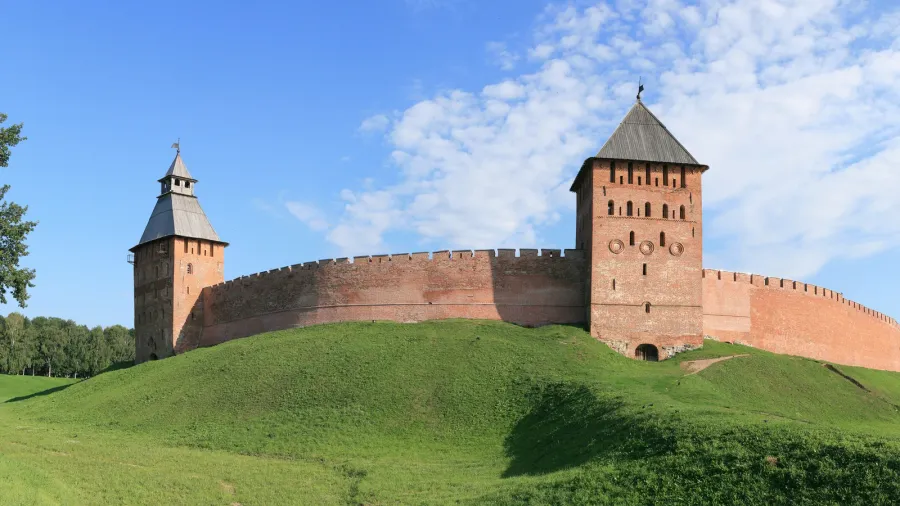
 Figure 4: Facade and brick arches of the historic Barda Mosque, representing medieval Caucasian craftsmanship.
The Barda Mausoleum rises fourteen meters above the plain as a cylindrical brick tower capped by a conical roof. Its exterior walls showcase a sophisticated decorative pattern: glazed turquoise tiles spell out the word Allah over two hundred times in repetitive kufic script across a background of red terracotta brick. Two grand portals, decorated with stalactite muqarnas and geometric borders, provide access to the upper chamber and the subterranean vaulted crypt where high-ranking Ilkhanid nobility were interred.
Alongside the mausoleum, the Barda Imamzadeh complex preserves four-domed brick architecture and tiled minarets built across several centuries over the grave of Ismail, a grandson of the fifth Shia Imam Muhammad al-Baqir. Archaeological excavations conducted throughout the modern district continue to unearth tenth-century ceramic kilns, glass workshops, and copper coinage from the Tartar riverbed. These structural survivors provide tangible markers of an urban civilization that anchored the Caucasus long before modern borders defined the map.