· World Landmarks · 4 min read ·
Gjirokastër Fortress: The Stone Stronghold of Southern Albania
Perched high above the Drino Valley, Albania's Gjirokastër Fortress preserves centuries of Byzantine, Ottoman, and Cold War military history in stone.
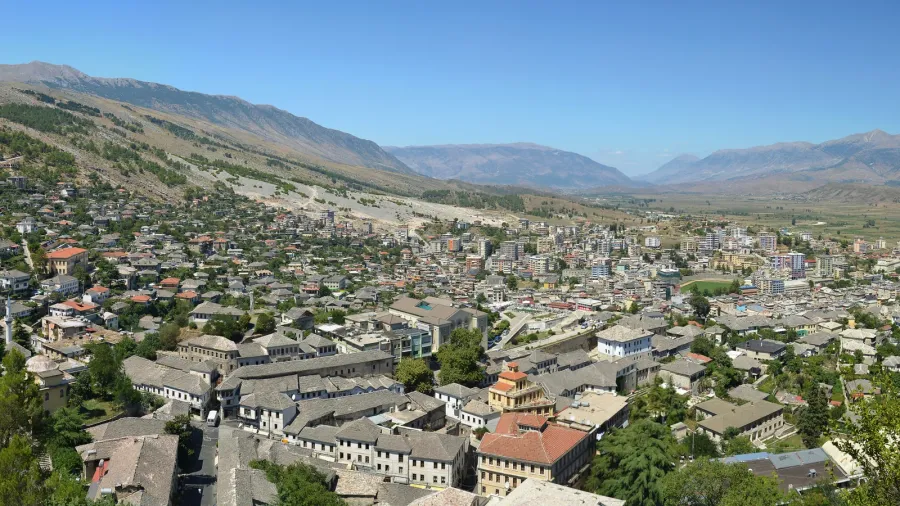
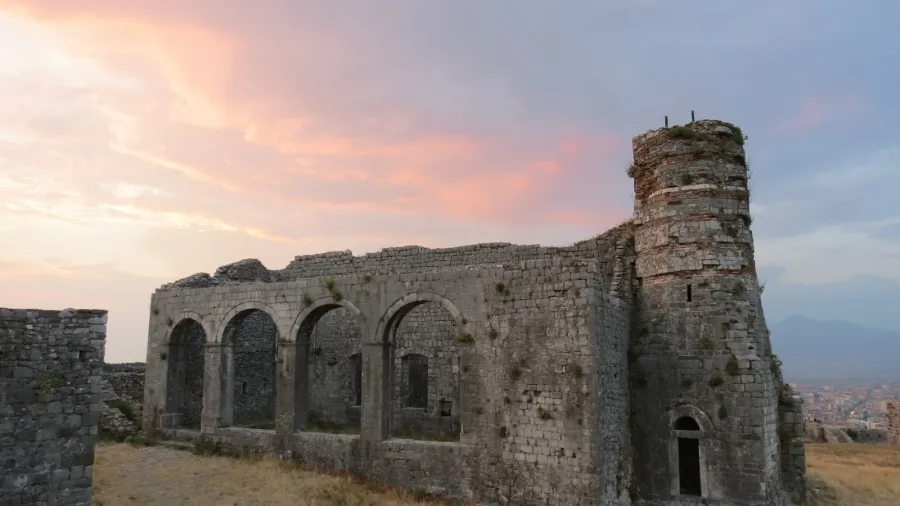
Rising over three hundred meters above the Drino River basin in southern Albania, the limestone citadel of Gjirokastër stands as one of the largest defensive fortifications in the Balkan Peninsula. Often described as a ship of stone anchored against the slopes of the Mali i Gjerë mountains, the fortress dictated control over the historic trade corridor connecting the Ionian Sea to the inland valleys of Epirus. Its layers of masonry record more than eight centuries of shifting military architecture, spanning medieval Byzantine origins, ambitious Ottoman expansion, and twentieth-century political repression.
Archaeological evidence indicates that a fortified settlement existed on the ridge as early as the twelfth century under the Despotate of Epirus, known in Byzantine chronicles as Argyrokastro, or the Silver Castle. As Ottoman forces expanded across the southern Balkans in the early fifteenth century, the citadel surrendered under negotiated terms in 1419, becoming the regional administrative center known as Ergiri.
 Figure 1: The upper parade grounds and nineteenth-century clock tower erected under Ali Pasha of Tepelena.
The Grand Rebuilding of Ali Pasha
The present architectural silhouette owes its imposing scale to Ali Pasha of Tepelena, the autonomous Ottoman warlord who governed the Pashalik of Yanina between 1787 and 1822. Recognizing the strategic value of Gjirokastër during his campaign to consolidate power across southern Albania and northern Greece, Ali Pasha initiated a massive reconstruction program in 1811. Over a frantic eighteen-month period, thousands of stonemasons re-engineered the ridge into a modern artillery fortress.
Ali Pasha expanded the perimeter walls to encircle nearly the entire plateau, erecting vaulted galleries capable of housing garrison troops and heavy ordnance. To solve the fortress’s historic vulnerability to prolonged sieges, his engineers constructed a ten-kilometer stone aqueduct that channeled spring water directly from Mount Sopot across deep mountain ravines. At the northern promontory, he raised an iconic clock tower, establishing a prominent visual marker across the valley.
 Figure 2: Massive vaulted stone casemates built into the limestone bedrock to withstand siege artillery.
Subterranean Prisons and Political Darkness
Beneath its open battlements, the fortress conceals an extensive labyrinth of subterranean vaults. During the reign of King Zog I in the early 1930s, the lower casemates were formally converted into a high-security prison complex. Italian and German occupation forces later exploited these damp stone cells to detain local partisans and civilians during World War II.
The fortress’s darkest chapter unfolded after 1944 under the Communist dictatorship of Enver Hoxha, himself a native of Gjirokastër. The regime transformed the citadel’s underground cells into a notorious detention center for political dissidents and intellectual opponents. Guarded by the secret police, inmates endured extreme isolation in stone chambers cut directly into the mountain bedrock. The prison remained active until 1968, when international scrutiny and shifting internal policies prompted the government to convert the facility into a museum complex.
 Figure 3: Interior armament gallery displaying artillery captured during World War II and the Cold War era.
The Cold War Trophy and Modern Preservation
Today, the vaulted halls that once echoed with artillery fire house the National Museum of Armaments. Its long subterranean gallery showcases an extensive array of German, Italian, and Allied weaponry recovered from battlefield engagements across Albania. Prominently displayed along the fortress battlements is a captured United States Air Force Lockheed T-33 Shooting Star jet trainer, forced down by Albanian fighter pilots near Tirana in December 1957 during the height of Cold War tensions.
In 2005, UNESCO inscribed Gjirokastër onto the World Heritage List as a rare example of a well-preserved Ottoman town built by agrarian landowners. The stone fortress anchors this historic landscape, standing as an enduring symbol of strategic resilience and architectural ingenuity above the white slate roofs of the old city.