· Street View & Routes · 5 min read ·
Varbitsa Pass: The Balkan Chokepoint That Shattered Byzantium
In 811, Khan Krum trapped Emperor Nikephoros I in the narrow defiles of Varbitsa Pass, crushing an imperial Byzantine army in a historic mountain ambush.
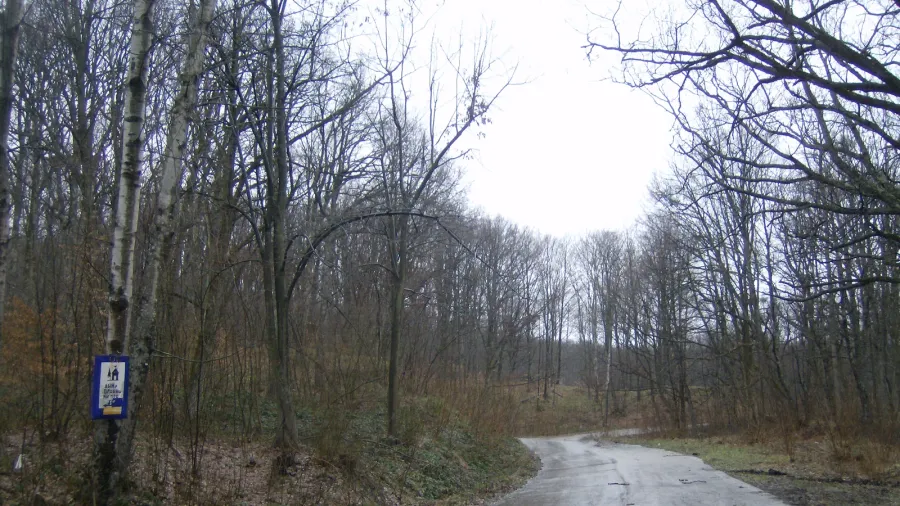
The eastern chain of the Balkan Mountains forms a formidable geographic divide across modern Bulgaria. Among these rugged ridges, Varbitsa Pass cuts through the limestone heights of Stara Planina, connecting the Danubian plains around Shumen to the Thracian valleys near the Petolachka junction. Rising to a saddle elevation of 891 meters across a 28.7-kilometer corridor, the pass narrows through rocky gorges and dense beech forests. For millennia, this winding defile served as a vital transit conduit, funneling merchants, Roman legions, and medieval armies through one of the few natural openings in the mountain range.
The terrain of Varbitsa Pass presents severe tactical risks for any military force moving without scout reconnaissance. Steep, forested ravines flank the narrow dirt roads, while rushing streams carved deep limestone cuts that leave travelers vulnerable from the high ground above. The roadway twists sharply through tight bottlenecks where mounted columns lose mobility and supply wagons quickly become wedged between sheer rock faces. In late July 811, these exact physical constraints transformed the mountain pass into the graveyard of an imperial army.
 Figure 1: Tactical map reconstructing the encirclement and destruction of the Byzantine imperial army in the mountain pass in July 811.
The conflict began when the Byzantine Emperor Nikephoros I launched a massive invasion to eliminate the First Bulgarian Empire. Leading an army estimated between 60,000 and 80,000 men, including elite tagmata guards and provincial thematic levies, Nikephoros crossed the Balkan passes in early July. His objective was total subjugation. The imperial force marched directly on Pliska, the Bulgarian capital, which lay undefended on the plains north of the mountains.
Bulgarian ruler Khan Krum recognized the overwhelming size of the Byzantine force and offered terms of peace, proposing territorial concessions. Nikephoros rejected the offer and sacked Pliska, burning the wooden palace complex, destroying grain stores, and putting the civilian population to the sword. Convinced that the Bulgarian state had collapsed, the emperor spent several days plundering the countryside before turning south toward Serdica and Constantinople.
 Figure 2: Architectural remains of the stone gate at Pliska, the capital city sacked by Nikephoros I prior to his retreat into the mountains.
Rather than pursuing a direct confrontation on the open plains, Krum initiated a coordinated counter-offensive based on geography. He mobilized the entire population, arming women and hiring Avar mercenaries to reinforce his cavalry units. While the Byzantine army marched south with plunder, Bulgarian engineers moved ahead to seal the mountain routes. In Varbitsa Pass, Bulgarian work crews constructed massive wooden palisades reinforced by deep ditches across the northern entrance and southern exit of the defile.
When the Byzantine advance guard entered the pass on July 24, they found the pathway blocked by timber ramparts defended by armed warriors. Scouts sent to find alternate routes reported that every side valley was obstructed by palisades and rocks. Hemmed inside the narrow gorge, the imperial army established an encampment along the dry riverbed, unable to deploy their cavalry or maintain cohesive battle lines. Byzantine chroniclers later recorded that the troops spent two days in despair, realizing they could neither advance nor retreat.
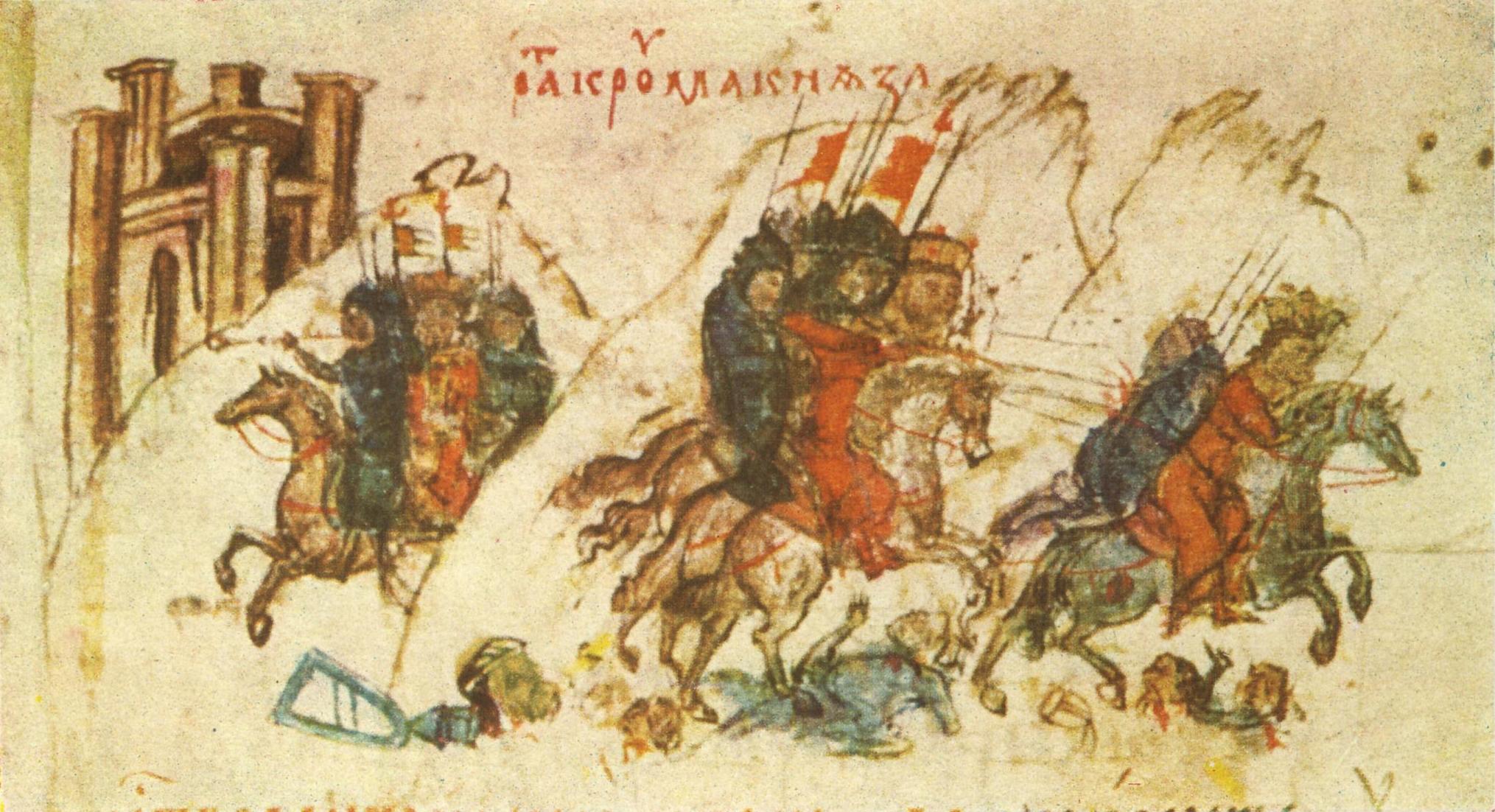 Figure 3: Fourteenth-century illumination from the Manasses Chronicle showing Khan Krum’s forces defeating the Byzantine army.
At dawn on Saturday, July 26, 811, the Bulgarians attacked from the surrounding heights. Units positioned along the cliff ridges hurled heavy boulders and tree trunks down into the packed Byzantine camp, shattering wagons and killing soldiers in their tents. Bulgarian infantry then charged down the steep slopes, cutting through the disoriented imperial ranks. The Byzantine cavalry attempted to break through a muddy riverbed, but hundreds of horses and armored riders drowned or became trapped in the silt before Bulgarian spearmen finished them off.
Emperor Nikephoros I died during the opening hours of the assault, cut down alongside his senior generals near his command pavilion. His son and co-emperor Staurakios suffered a paralyzing spinal wound from a Bulgarian sword and escaped with a small escort only because loyal guards carried him through a goat trail. He died of his injuries a few months later. Nikephoros became only the second Roman emperor in history killed by foreign enemies in battle, five centuries after Decius fell to the Goths in 251.
 Figure 4: The winding mountain roadway through Varbitsa Pass, showing the steep terrain and dense forests flanking the modern road.
Following the battle, Khan Krum ordered the emperor’s body recovered from the field. According to contemporary Byzantine accounts by Theophanes the Confessor, Krum displayed the severed head on a pole before cleaning the skull, encasing it in silver, and using it as a drinking vessel for diplomatic banquets. The defeat broke Byzantine dominance in the northern Balkans and established the First Bulgarian Empire as a permanent imperial power in southeastern Europe.
Today, Varbitsa Pass remains a remote mountain crossing. National Road I-7 winds through the switchbacks, but landslides and neglected asphalt have closed parts of the high route to regular motor traffic. Hikers along the Kom-Emine long-distance trail traverse these ridges, walking through silent beech forests where the geography of a narrow mountain canyon once decided the fate of two empires.