· Castles & Palaces · 5 min read ·
Shahbulag Castle: The Limestone Stronghold That Shaped Karabakh
Built in 1752 around a mountain spring near Aghdam, Shahbulag Castle served as the strategic stronghold where Panah Ali Khan consolidated the Karabakh Khanate.
When Nader Shah of Persia was assassinated in June 1747, the centralized authority governing the South Caucasus collapsed. Across the rugged valleys and river basins between the Kura and Aras rivers, regional warlords seized the sudden power vacuum to carve out hereditary domains. Among them was Panah Ali Khan, an ambitious chieftain of the Turkic Javanshir tribe who proclaimed the independence of the Karabakh Khanate. Securing sovereignty required more than political declarations; it demanded an unyielding military stronghold capable of withstanding rival regional khans and imperial armies.
His initial seat at Bayat Castle in the lowlands proved vulnerable to siege warfare. Seeking superior ground with a reliable water source and direct control over transport routes, Panah Ali Khan moved his headquarters northwest toward the foothills of the Karabakh mountain range. In 1751, his builders commenced construction of a stone fortress complex around a perennial freshwater spring known as Shahbulag, meaning “Spring of the Shah,” located in the Tarnavut district near the Khachinchay River.
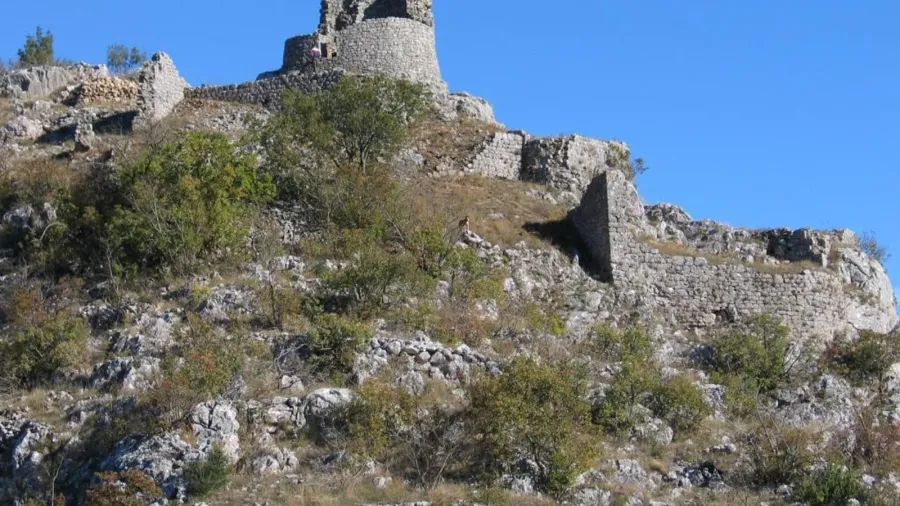
 Figure 1: The limestone perimeter walls and semicircular bastion towers of Shahbulag Castle.
The geographical position chosen for Shahbulag Castle held deep strategic and historical significance. The site sat on the slopes of Mount Vangli, adjacent to the limestone cliffs where archaeologists later uncovered the ruins of Tigranakert, an ancient Hellenistic Armenian city founded in the first century BCE. Medieval chronicles often referred to the surrounding territory as Tarnagyut or Tarnavut, corruptions of the earlier antique settlement name. By erecting his fortress over these ancient transit crossroads, Panah Ali Khan placed his garrison directly between the plains of the Kura basin and the fortified mountain valleys controlled by the autonomous Armenian Melikdoms of Karabakh, specifically confronting the neighboring Melikdom of Khachen.
Constructed from half-hewn limestone and local dimension stone bound with lime mortar, Shahbulag Castle was conceived as a compact, self-contained fortified administrative complex. Historical accounts by the nineteenth-century chronicler Mirza Jamal Javanshir record that the enclosure incorporated residential quarters, public baths, an active market bazaar, and a stone mosque alongside its defensive perimeter.
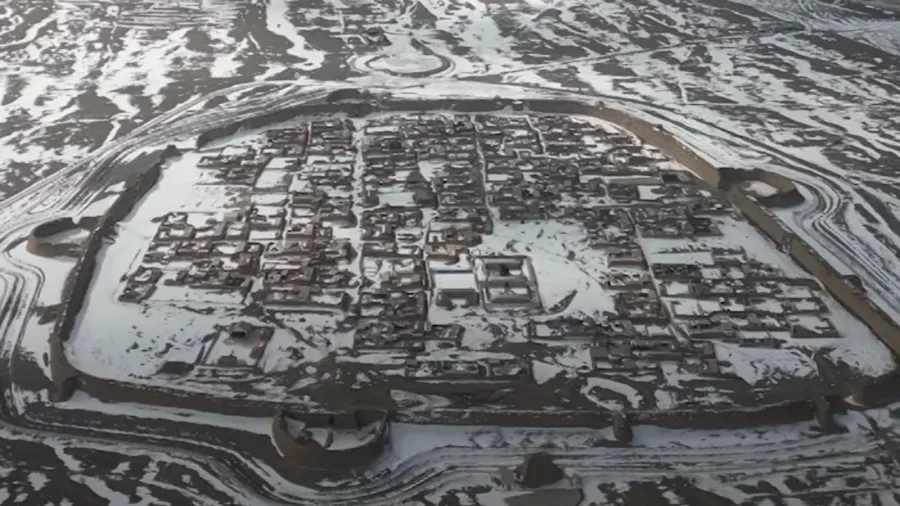
 Figure 2: Interior courtyard and surviving stone masonry within the fortress perimeter.
The fortress layout formed a strict rectangle reinforced by heavy masonry walls rising seven meters in height. At each corner and along the curtain walls, master masons built semicircular and cylindrical defensive towers extending to eight and a half meters. These bastions were engineered for multi-tiered rifle and musket fire, equipped with narrow embrasures, arrow slits, and stepped parapet merlons across the upper ramparts.
Access was tightly controlled through a single reinforced entrance set into the midpoint of the eastern curtain wall. During the reign of the khan, this gatehouse was sheltered by a two-story fortified tower. A massive stone staircase led from the inner courtyard directly to the upper level of the gatehouse, which contained private reception chambers reserved for Panah Ali Khan himself.
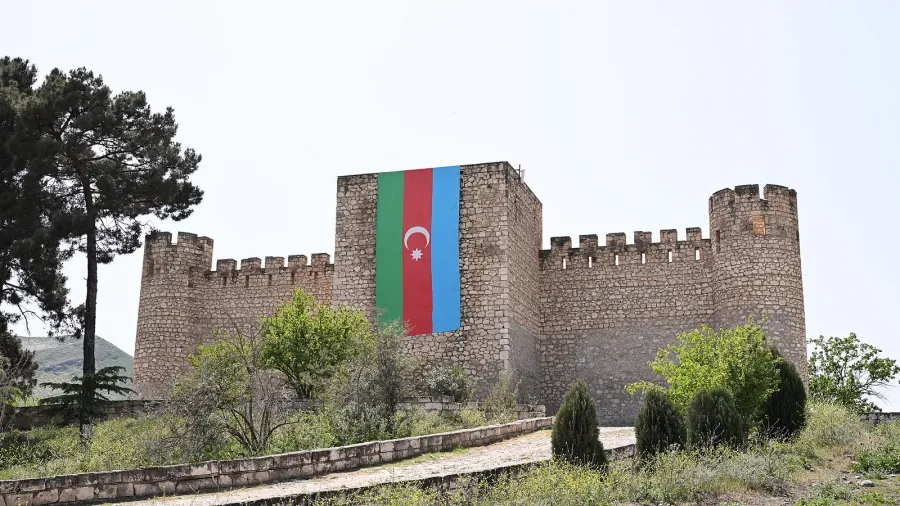
 Figure 3: Exterior defensive walls and rounded corner towers built from local dimension stone.
Immediately adjacent to the northwestern curtain wall stood the fortress mosque, constructed simultaneously between 1751 and 1752. The religious structure featured a square stone prayer hall topped by a hemispherical dome measuring 5.1 meters on each side, fronted by an open eastern veranda. The roof beams of the portico rested on octagonal stone pillars with chamfered edges, establishing an architectural vocabulary of limestone arches and vaulting that local craftsmen later exported throughout the region.
Although Shahbulag provided superior security compared to Bayat, the expanding geopolitical ambitions of the Karabakh Khanate soon outgrew its foothills. Constant military friction with neighboring principalities convinced Panah Ali Khan that an even more impregnable mountain bastion was required. By 1756, the khan relocated his court, prominent nobility, and garrison to the natural mountain plateau of Panahabad, the modern city of Shusha. The architectural and spatial methods tested at Shahbulag served as the direct template for the defensive circuits and palaces erected across Shusha.
 Figure 4: Arched stone passageways and vaulted chambers inside the fortress complex.
Even after the administrative capital moved to Shusha, Shahbulag remained a garrison fort at the entrance to the Karabakh highlands. In the early nineteenth century, the South Caucasus turned into the primary battleground between the Russian Empire and Qajar Iran. In May 1805, Panah Ali Khan’s successor, Ibrahim Khalil Khan, signed the Treaty of Kurekchay, placing the Karabakh Khanate under Russian imperial suzerainty. Two months later, on July 6, 1805, a Qajar army commanded by Crown Prince Abbas Mirza surrounded a Russian contingent under Colonel Karyagin at Shahbulag. Following a siege, the Iranian troops seized the castle, demonstrating its enduring importance along the Caucasian military corridors.
Following decades of relative obscurity, the government of the Azerbaijan SSR carried out extensive architectural conservation on the surviving fortress walls and mosque in the early 1980s. During the First Nagorno-Karabakh War in the summer of 1993, the fortress was captured by Armenian forces during the Battle of Aghdam. Throughout the period of local Armenian administration, the interior of the fortress functioned as an archaeological museum displaying gold ornaments, antique glassware, and Hellenistic coins unearthed from the neighboring excavations of ancient Tigranakert.
Under the terms of the trilateral ceasefire agreement that concluded the 2020 Nagorno-Karabakh War, the Aghdam District was transferred back to Azerbaijani administration on November 20, 2020. Ahead of the handover, the archaeological museum collection was evacuated, leaving the 1752 limestone fortress standing once again as the oldest intact architectural monument of the Karabakh Khanate.