· World Landmarks · 4 min read ·
Ramana Tower: The 14th-Century Fortress of the Shirvanshahs
Perched on a rocky ridge outside Baku, Ramana Tower guarded medieval trade routes and Caspian shores under the Shirvanshah dynasty.
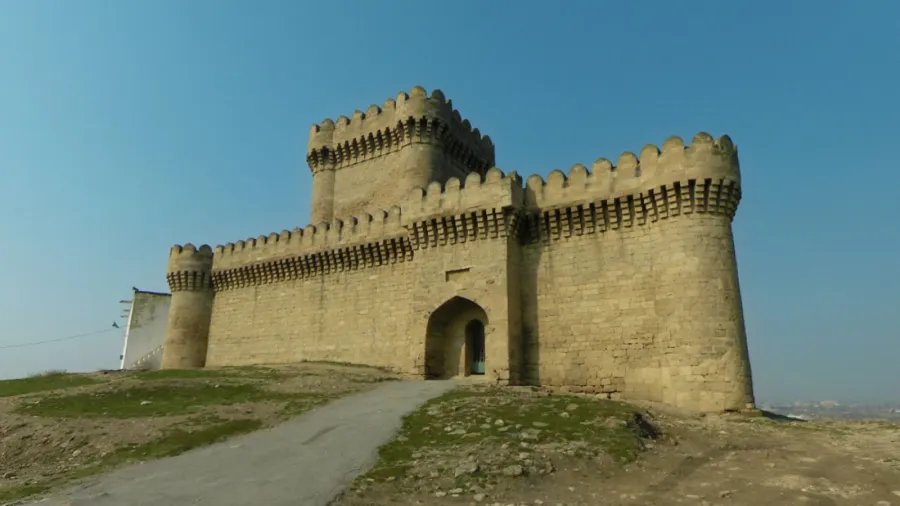
Rising above the arid limestone plateaus of the Absheron Peninsula, Ramana Tower occupies an elevated ridge in the village of Ramana, within the modern Sabunchu district of Baku. Constructed primarily from native yellowish-white limestone, the fortress belongs to an integrated network of medieval defensive structures erected during the reign of the Shirvanshahs. These fortifications defended coastal settlements, monitored shipping lanes on the Caspian Sea, and offered refuge during maritime raids.
Historical records date the current architectural complex to the 14th century, though several architectural historians argue that initial fortifications on the outcrop trace back to the 12th century. The Shirvanshah state, centered in Shamakhi and later Baku, faced persistent threats from sea-borne raiders, regional nomadic factions, and rival dynasties. In response, military engineers fortified the Absheron Peninsula with stone keeps linked by line-of-sight signal posts.
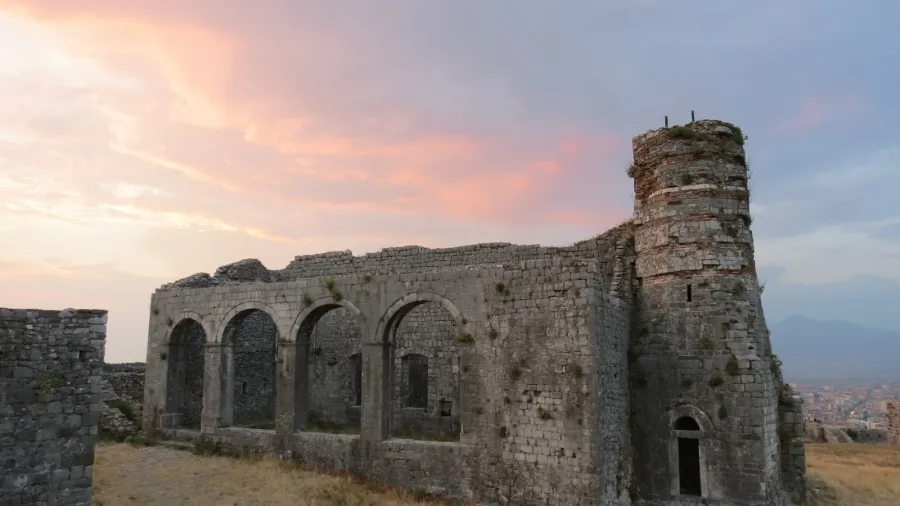
 Figure 1: The limestone ramparts and quadrangular keep of Ramana Tower viewed from the village perimeter.
Architecture of the quadrangular keep
The fortress incorporates a compact defensive plan designed to exploit the natural topography. Its outer curtain walls encircle a courtyard measuring 28 meters by 10 meters, adapting directly to the contours of the limestone cliff. Rounded semicircular buttress towers strengthen the corners and wall curtains, providing defensive archers with overlapping fields of fire along the approaches.
Unlike the circular defensive towers found elsewhere on Absheron, such as Round Mardakan Castle, the primary keep at Ramana features a distinct quadrangular plan. Rising approximately 15 meters in height, the tower contains four distinct tiers connected by internal wall stairs. Each floor features stone vaults and narrow slit windows that functioned as arrow embrasures while restricting incoming projectiles.
The fortress entrance sits within a protected inner courtyard, forcing potential attackers into a narrow defensive passage under direct observation from the battlements. The rooftop platform terminates in projecting stone machicolations and crenellated parapets, allowing defenders to monitor and secure the base of the walls from above.
 Figure 2: South-facing elevation illustrating the rounded corner bastions and multi-tiered defensive walls.
Strategic defense of the Absheron Peninsula
Ramana Tower functioned as part of a coordinated regional defense system rather than an isolated bastion. Situated inland between the eastern tip of the peninsula and the bay of Baku, the tower maintained direct optical communication with coastal keeps in Mardakan, Bilgah, and Nardaran, as well as the fortified complex of the Maiden Tower in the center of Baku.
When hostile fleets approached the Caspian coastline, watchmen lit signal fires atop the battlements, relaying warnings across the peninsula within minutes. This rapid communication enabled local villagers to gather their livestock and seek shelter behind the stone curtain walls before raiding parties could strike. Local folklore and historical accounts also document subterranean tunnels running beneath Ramana, connecting the keep to nearby caves and defensive redoubts.
The surrounding terrain provided economic assets alongside military advantages. Salt lakes and natural petroleum seepages around Ramana yielded valuable trade commodities throughout the Middle Ages. The garrison stationed at the tower secured these extraction sites and protected merchant caravans traveling westward toward the silk markets of Shirvan and Tabriz.
 Figure 3: Upper battlements and masonry detailing of the watchtower bastions.
Conservation and cultural legacy
Following the decline of the Shirvanshah state in the 16th century, the military necessity of the Absheron fortifications gradually diminished. Ramana Tower survived centuries of weathering and industrial development as Baku expanded into a major oil-producing hub in the late 19th and 20th centuries. Despite the encroachment of oil derricks and modern residential quarters, the limestone keep retained its structural integrity.
In the mid-20th century, the dramatic silhouette of Ramana Castle attracted Azerbaijani filmmakers, serving as an authentic historical backdrop for iconic cinema productions including Koroglu, Nasimi, and Babek. These films introduced the medieval fortress to generations of viewers across the Soviet Union and independent Azerbaijan.
In 2001, the Ministry of Culture of Azerbaijan registered Ramana Tower as an architectural monument of world significance and submitted it to the UNESCO World Heritage Tentative List as part of the Caspian Shore Defensive Constructions. Modern restoration programs have stabilized the masonry and cleared the courtyard, preserving the site as a key reference point for medieval military architecture in the Caucasus.