· Geographic Paradoxes · 4 min read ·
How the Medieval Piast Concept Was Weaponized to Shift Poland 200 Miles West
Conceived by right-wing nationalists, the medieval Piast Concept was co-opted by communists in 1945 to justify moving Poland's borders 200 miles west.
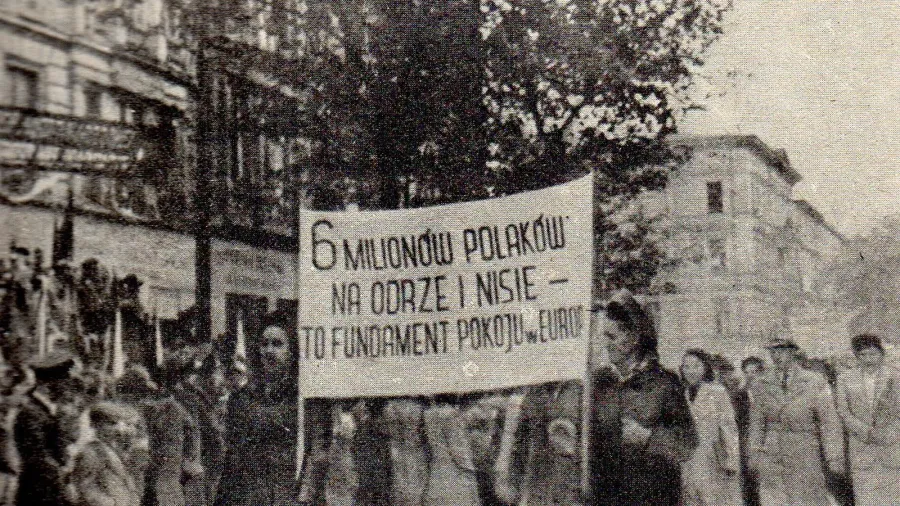
In the autumn of 1945, stonemasons in the freshly renamed city of Wrocław climbed scaffolding across shattered baroque squares with chisels and plaster. Their assignment was forensic erasure: chipping German Gothic script off municipal lintels, plastering over cemetery headstones, and scouring seven centuries of Habsburg and Prussian urban life from view. To the bewildered Polish families arriving on freight trains from Soviet-annexed Lwów and Wilno, state banners proclaimed a startling historical verdict: Byliśmy, jesteśmy, będziemy (We were here, we are here, we will be here). By order of Joseph Stalin and the Polish communist authorities, an entire nation had been lifted from its eastern moorings and dropped two hundred miles to the west, all justified by invoking the ghost of a medieval royal house: the Piast dynasty.
The Ethnocentric Blueprint of the National Democrats
This staggering geopolitical sleight of hand had its roots in late nineteenth-century Warsaw. In the 1890s, political theorist Jan Ludwik Popławski and right-wing leader Roman Dmowski, architect of the National Democracy movement (Endecja), formulated what became known as the Piast Concept. At the time, Poland had been wiped off the map for a century, partitioned between Russia, Prussia, and Austria.
Dmowski argued that historical Poland’s fatal mistake was its eastern expansion under the Jagiellonian dynasty during the Renaissance. By sprawling across Lithuania, Belarus, and Ukraine, Poland had diluted its Slavic ethnic core and created an ungovernable, multi-ethnic commonwealth. Instead, Dmowski looked back to the tenth and eleventh centuries, when the first Piast kings, Mieszko I and Bolesław the Brave, ruled a compact, ethnically coherent territory bounded by the Baltic Sea, the Oder River, and the Vistula. For Dmowski and his anti-communist followers, the historic enemy was Germany, and the primary national mission was recovering the ancestral Slavic west.
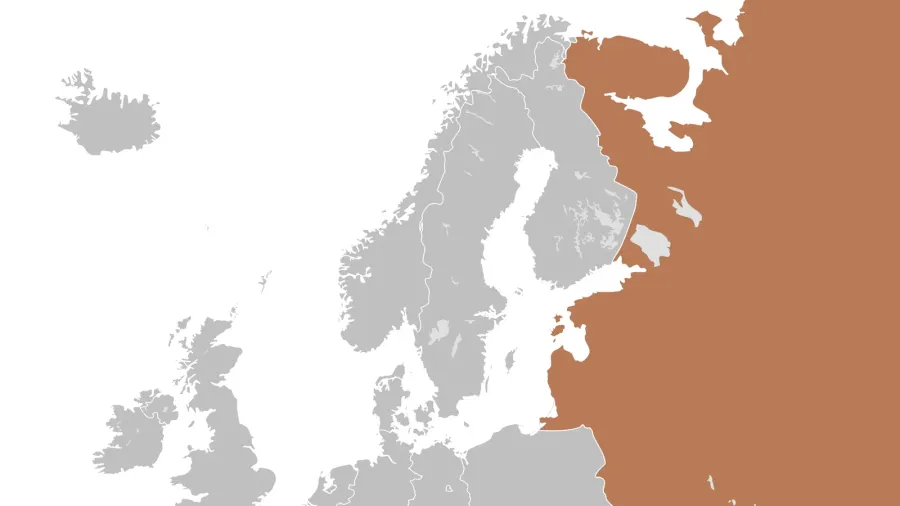
 Figure 1: Demographic engineering reshaped the western territories between 1945 and 1959, replacing expelled German populations with displaced Poles from the annexed eastern borderlands.
Stalin’s Cartographic Compromise
The interwar Second Polish Republic firmly rejected the Piast vision. Led by Józef Piłsudski, interwar Poland fought the Soviet Union in 1920 to reclaim its sprawling eastern borderlands (Kresy), ruling over millions of Ukrainians, Belarusians, and Jews. But the cataclysm of World War II smashed Piłsudski’s federalist ambitions.
At the Yalta and Potsdam conferences in 1945, Stalin demanded that the Soviet Union keep eastern Poland, which the Red Army had seized under the 1939 Molotov-Ribbentrop Pact. To compensate Poland and secure a pliant client state, the Soviet premier insisted on amputating Germany’s eastern provinces: Silesia, Pomerania, and southern East Prussia. The new frontier was fixed along the Oder and Lusatian Neisse rivers.
 Figure 2: The Oder-Neisse line established Poland’s western frontier at Potsdam, anchoring the new geopolitical reality in medieval Piast geography.
This imperial barter triggered one of the largest forced migrations in European history. Approximately eight million Germans fled or were systematically expelled westward, while millions of Poles were relocated into the emptied cities and farms.
The Communist Transformation of a Nationalist Myth
Faced with the immense challenge of legitimizing this territorial transformation, the new Polish United Workers’ Party performed an ideological backflip. The Marxist-Leninist regime seized upon Dmowski’s right-wing nationalist dogma. The annexed German provinces were officially branded as the Ziemie Odzyskane (the Recovered Territories).
State propaganda declared that the post-war border was not an imperial compensation dictated by Moscow, but the rightful restoration of ancestral Piast lands after seven centuries of Germanic encroachment. Academics, archaeologists, and museum curators were organized by the state to prove unbroken Slavic continuity on the Oder. Historical archives that documented centuries of German cultural, legal, and economic development were suppressed under strict state censorship.
The Deconstruction of an Artificial Homeland
In contemporary historiography, the Piast Concept is understood as one of the most ambitious experiments in state-directed historical engineering. Medieval archeological layers did indeed contain early Slavic pottery and Piast fortifications, but invoking tenth-century tribal boundaries to legitimize twentieth-century ethnic expulsions was an ideological construction.
For generations of Polish settlers who grew up in Breslau-turned-Wrocław or Stettin-turned-Szczecin, the Piast narrative functioned as a necessary psychological coping mechanism, helping uprooted families feel at home among red-brick Prussian architecture and strange cobbled streets. Decades after the collapse of communism and the 1990 German-Polish Border Treaty, scholars have untangled the historical reality from the propaganda, acknowledging the layered, shared heritage of Central Europe’s borderlands.