· Natural Wonders · 5 min read ·
Piégut-Pluviers Granodiorite: Deep Roots of the Variscan Collision
Spanning 250 square kilometers in northern Dordogne, this 325-million-year-old pluton records the intense ductile shearing and rare mineralization of France.
Along the northwestern margin of the French Massif Central, a vast slab of crystalline bedrock lies embedded within the landscape of the northern Dordogne. Known to geologists as the Piégut-Pluviers Granodiorite, this igneous complex covers roughly 250 square kilometers within the Arrondissement of Nontron. Unlike isolated volcanic plugs that erupt swiftly onto Earth’s crust, this formation solidified deep inside the Variscan orogeny approximately 325 million years ago during the Serpukhovian stage of the Carboniferous period. Cooling under kilometers of overburden, it preserves a direct record of crustal collision, magmatic differentiation, and profound ductile deformation.
The pluton forms a distinctive morphological shape on geological maps, resembling an inverted comma oriented toward the north. Its southern core measures approximately 15.5 kilometers from northeast to southwest and 15 kilometers from northwest to southeast. From this square-like core, a tapering northern appendix extends nearly ten kilometers along the Trieux valley, separated from the principal intrusive mass only by a sliver of migmatitic gneiss. Across this expanse, the granodiorite forms a gently tilted plateau descending from 375 meters above sea level in the northeast to 135 meters in the southwest.
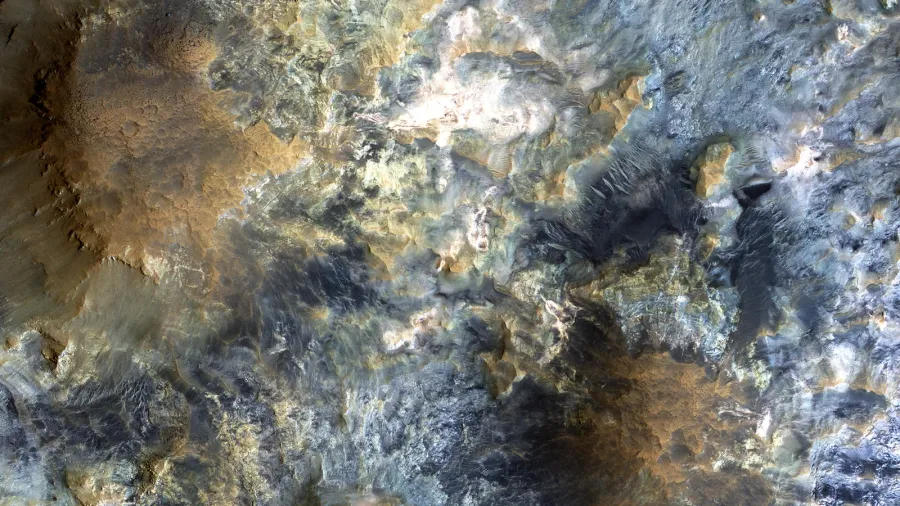
 Figure 1: Structural foliation and shear bands across the southern flank of the granodiorite.
The eastern and northern boundaries of the complex merge into the slightly younger Saint-Mathieu Leucogranite, dated to roughly 315 million years ago. Together, these two igneous bodies compose the Saint-Mathieu Dome, an uplifted structural swell. In contrast, the northwestern and southeastern margins transition into ancient paragneiss host rocks. In several zones, these boundaries are diffuse and interfingered over hundreds of meters, indicating that the granodiorite magma assimilated existing metasediments rather than forcefully carving a single abrupt chamber. Along the western edge, marine sandstones and arkoses from the Liassic transgression of the Aquitaine Basin rest unconformably atop the eroded granitic surface.
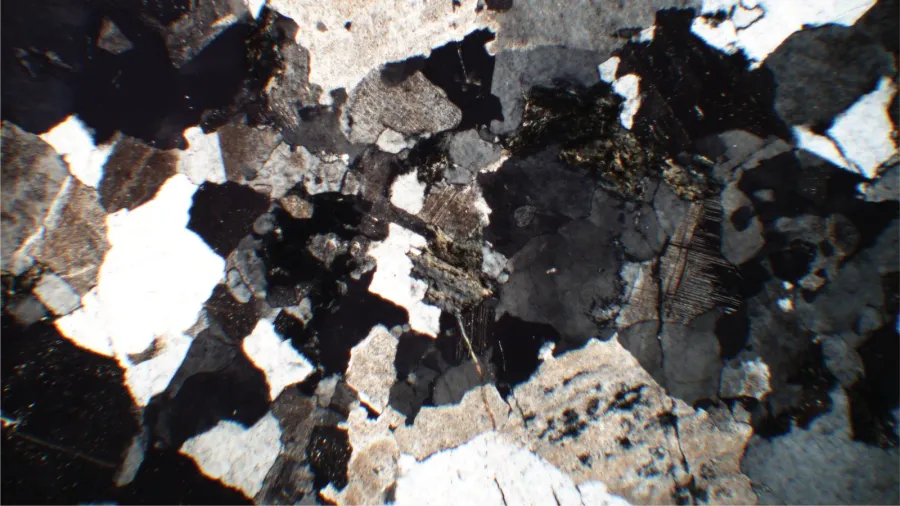
Petrologically, the intrusion diverges from a completely uniform batholith. Field investigations divide the massif into four distinct facies reflecting variations in cooling dynamics and fluid interaction. The most widespread is the coarse-grained common facies, displaying an isometric fabric composed of 26 percent globular quartz, 42 percent zoned plagioclase with andesine cores, 18 percent perthitic orthoclase, and 10 percent chloritized biotite. Accessory crystals include allanite, epidote, apatite, and zircon. Chemically classified as an I-type calc-alkaline rock, its high silica fraction places it close to an adamellite or monzonitic granite.
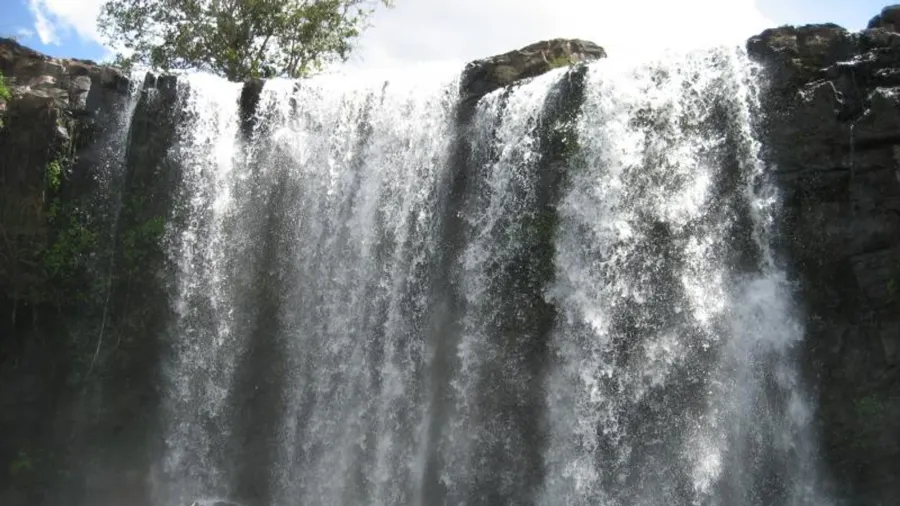
 Figure 2: The coarse-grained common facies of the Piégut-Pluviers pluton, characterized by isometric quartz and zoned feldspar.
Gradual textural shifts produced a coarse-grained porphyric facies near Lacaujamet and Puybégout, where potassium feldspar megacrysts expand up to six centimeters across. Meanwhile, along the southern margin by the Bandiat river, the rock transitions into a fine-grained, hornblende-bearing facies. Here, silica levels drop significantly, alkali feldspar thins out, and green hornblende increases, transforming the rock into a dark, dioritic composition. A separate porphyritic microgranite occupies the northern appendix, representing either a localized chilled border or an independent magma batch.
Tectonic activity did not cease when the molten rock consolidated. Weathered outcrops reveal pervasive structural foliation aligned with regional Variscan shear zones. As the cooling crystal mush solidified, it underwent sustained ductile deformation within an active Riedel strike-slip system. This sheared fabric generated intersecting fracture patterns oriented northwest-southeast and northeast-southwest, accommodating regional crustal transport under both extensional and compressional regimes.
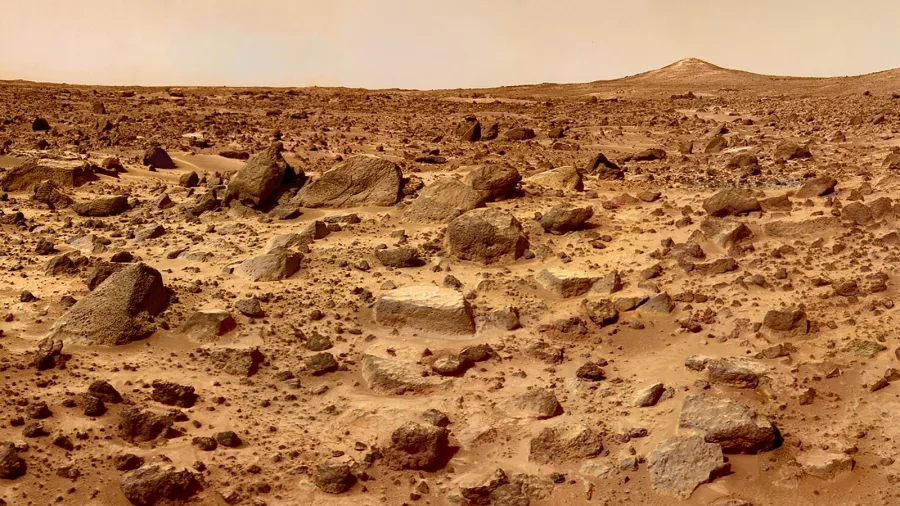
 Figure 3: Hematite-stained plagioclase in the rare red facies, documenting late-stage hydrothermal metasomatism.
When ductile stretching subsided, brittle strain ruptured the crystallized body, opening conduits for hydrothermal circulation and late-stage intrusions. Pink and grey aplite dikes, reaching up to a kilometer in length, injected into these orthogonal joints alongside rare lamprophyres and pegmatites. Hydrothermal solutions rich in iron invaded the plagioclase crystals near Abjat-sur-Bandiat, creating a striking hematite-stained red granodiorite facies accompanied by pervasive biotite chloritization.
These fractures also channeled metal-bearing fluids, producing the famous Cantonnier Lode near Nontron and Saint-Pardoux-la-Rivière. Operating until 1939, historic mines extracted lead, zinc, and silver from thick veins of galena and sphalerite. The lode became celebrated among mineralogists for rare secondary mineral species, including pyromorphite, crocoite, cerussite, embreyite, and vauquelinite.
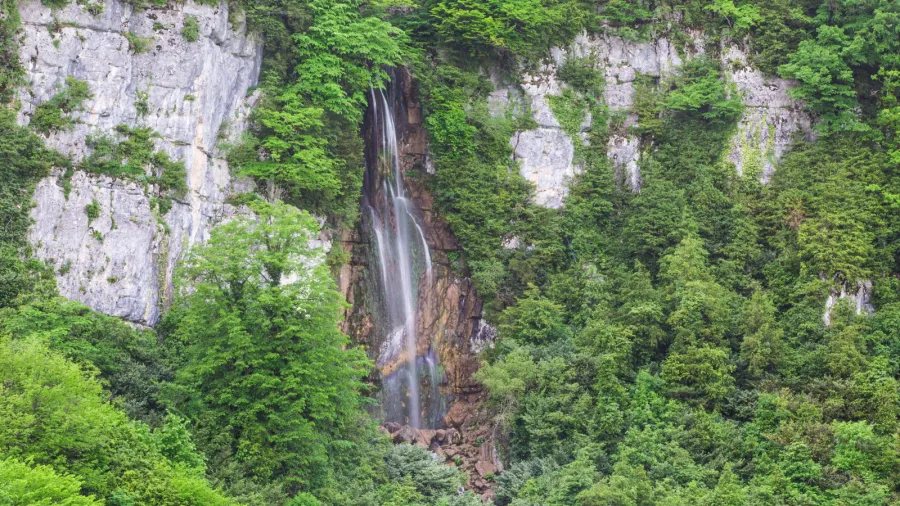
 Figure 4: Unconformable transgression of Liassic arkose from the Aquitaine Basin over the eroded crystalline basement.
Beyond underground mining, local industry quarried the durable stone for construction lintels, road foundations, and architectural facing. While historical quarries such as Tabataud and Lacaujamet have fallen silent, an active quarry at Abjat-sur-Bandiat continues to extract the decorative red facies for aggregate and road surfacing. In the late 1990s, the national waste agency ANDRA evaluated the granodiorite as a potential deep repository for nuclear waste, but determined civic opposition in Dordogne brought the initiative to an abrupt halt. Today, the Piégut-Pluviers massif stands preserved in the quiet hills of Périgord, an authentic window into the magmatic forces that assembled the European continent.