· Natural Wonders · 3 min read ·
Why an Ancient Catastrophic Flood Channel on Mars Holds the Clues to Alien Life
Carved by catastrophic ancient floods over 3.7 billion years ago, the clay-layered gorge of Mawrth Vallis preserves the premier record of a habitable Mars.
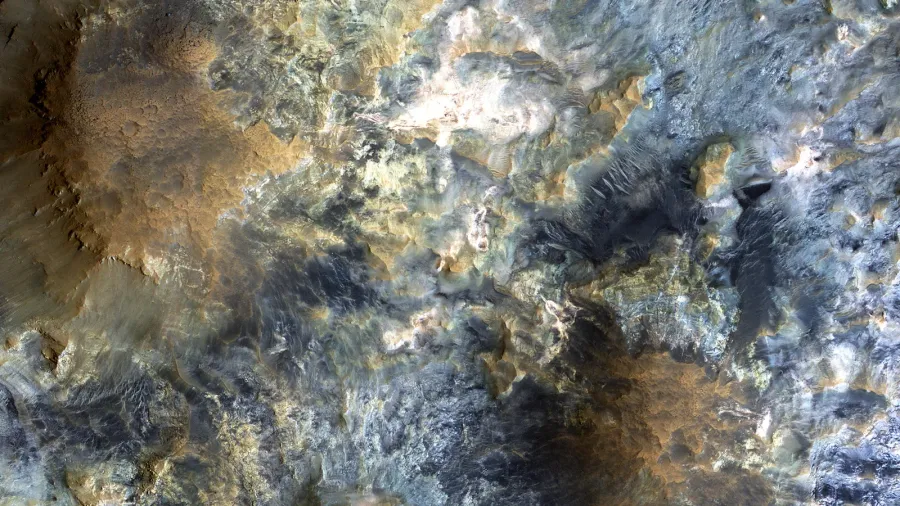
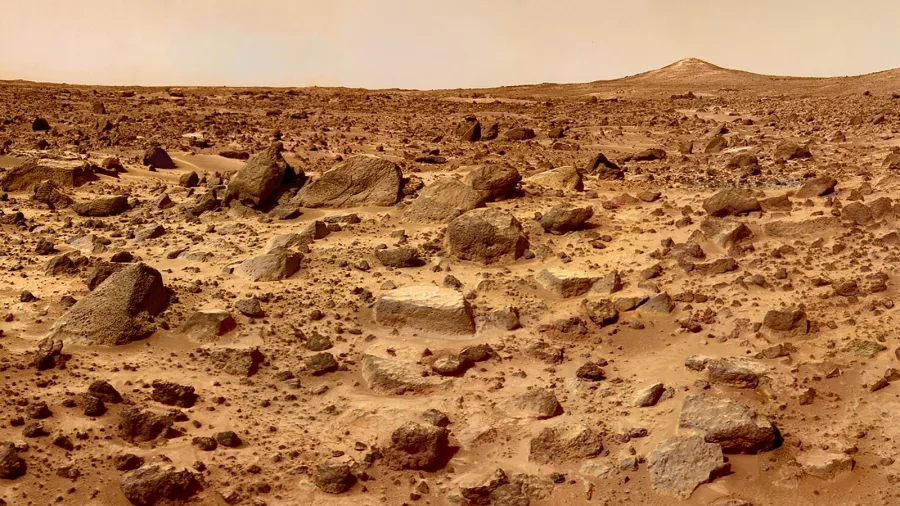
Along the rugged transition zone dividing the cratered southern highlands of Mars from its smooth northern lowlands lies one of the most enigmatic scars in the solar system. Mawrth Vallis, named after the Welsh word for Mars, is an ancient outflow channel stretching roughly 636 kilometers across the Oxia Palus quadrangle. Unlike typical dry river valleys carved by gentle, persistent precipitation, Mawrth Vallis was excavated more than 3.7 billion years ago by catastrophic torrents of water that tore through the Martian crust with ferocious volume. Today, its exposed canyon walls and plateau flanks reveal a visible stratigraphic library that planetary geologists consider the premier window into the Red Planet’s aqueous past.
The scale of the gorge defies terrestrial comparison. Plummeting up to two kilometers below the surrounding Martian datum, the valley cuts through cratered Noachian terrain, dating to an epoch when Mars possessed an active hydrological cycle, a denser atmosphere, and possibly an expansive northern ocean. Orbiting spectrometers, including the Compact Reconnaissance Imaging Spectrometer for Mars (CRISM) aboard NASA’s Mars Reconnaissance Orbiter and the OMEGA instrument on the European Space Agency’s Mars Express, first brought global scientific attention to this desolate chasm in the mid-2000s. Instead of uniform volcanic basalt, the instruments detected an extraordinary abundance of phyllosilicates, or clay minerals, blanketing hundreds of square kilometers.

These clay beds represent a vertical timeline of changing geochemical environments. At the base of the sequence lies a thick, dark layer enriched with iron- and magnesium-bearing smectite clays, predominantly nontronite. These minerals typically form in neutral to alkaline waters where liquid water interacts over long durations with basaltic rock in subsurface hydrothermal settings or standing bodies of water. Above this foundation rests an intermediate layer of aluminum-rich clays, including montmorillonite and kaolinite, topped by hydrated silica.
This distinct stratigraphy documents a dramatic shift in Martian climate. The transition from iron-magnesium smectites to aluminum-rich kaolinite points to extensive leaching by acidic or weathered surface waters as the planet cooled and dried during the transition from the Noachian to the Hesperian era. The top of the sedimentary pile is capped by a dark, resistant mantle of volcanic rock, which shielded these delicate clay deposits from eons of wind abrasion and solar radiation.

For astrobiologists, phyllosilicates are prized above all other Martian rocks because clays possess an extraordinary capacity to preserve organic molecules and microfossils. On Earth, fine-grained clay minerals capture biomolecules within microscopic mineral sheets, protecting them from oxidation and decay over billions of years. Because Mawrth Vallis exposed hundreds of meters of pristine clay layers without the destructive metamorphism common on tectonically active planets, it became one of the leading candidates for robotic landing missions.
During the site selection process for NASA’s Curiosity rover, Mawrth Vallis reached the final four candidates before losing to Gale Crater due to engineering concerns regarding terrain roughness and radar reflectivity. Years later, it was again shortlisted for the joint ESA-Roscosmos ExoMars Rosalind Franklin rover, ultimately yielding to nearby Oxia Planum. Despite missing out on immediate wheeled exploration, Mawrth Vallis remains a focal point for future sample-return studies and human exploration architectures. The sheer thickness of its hydrated strata, combined with the presence of sulfates and silica, ensures that this frozen channel will remain central to unlocking whether life ever gained a foothold beyond Earth.