· Indigenous Peoples · 4 min read ·
Why Nomadic Pastoral Societies Thrive Where Agriculture Completely Fails
Across hyper-arid deserts and frozen steppes, pastoral societies turn indigestible scrub into vital sustenance without building a single permanent city.
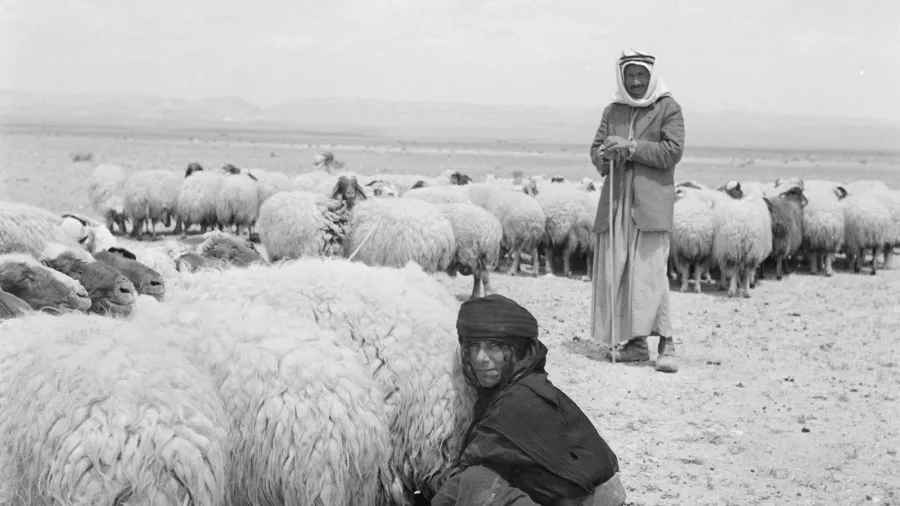
Dawn arrives over the dry plateau of the Zagros range with the sound of shifting stone and the low chorus of hundreds of sheep on the move. There are no stone foundations here, no irrigation canals, and no granaries stocked against winter famine. Yet this community of Bakhtiari herders maintains an uninterrupted lineage that outlasted the agrarian city-states of ancient Mesopotamia. Across nearly a quarter of the Earth’s terrestrial landmass, sedentary agriculture is physically impossible because soils are too fragile, rain is too erratic, or temperatures dip far too low for cultivated crops. In these extreme marginal zones, pastoral societies established a counter-intuitive survival blueprint: instead of forcing crops into unyielding soil, they move.
Pastoralism represents one of humanity’s most sophisticated ecological adaptations. Developed roughly 10,000 years ago in parallel with settled farming, pastoral systems emerged along the arid belts of North Africa, the Middle East, the Central Asian steppe, and the high Tibetan plateau. Rather than tethering human survival to a single plot of topsoil, pastoral groups domesticated ruminants—camels, goats, sheep, yaks, and reindeer—capable of digesting fibrous grasses and thorny shrubs that humans cannot consume. The livestock function as living biological converters, turning sparse, seasonal vegetation into milk, blood, wool, and transport.
 Figure 1: A traditional Bakhtiari nomad encampment situated along seasonal transhumance routes in southwestern Iran.
The survival of pastoral societies hinges on mobility governed by precise customary law rather than arbitrary wandering. Anthropologists distinguish two primary patterns: nomadic pastoralism and transhumance. Nomads follow irregular seasonal precipitation patterns across expansive plains and deserts, navigating routes dictated by fresh forage and subterranean watering holes. Transhumant pastoralists, by contrast, follow regular vertical migrations between established seasonal pastures, moving herds up into alpine meadows during summer heat and retreating to low-altitude river valleys when winter snows lock the peaks.
Far from being lawless wilderness wanderers, pastoral communities operate under intricate governance systems. Grazing territories, known among Central Asian herders or Sahelian pastoralists through customary tenures, are managed communally to prevent overgrazing. Pasture rotations allow delicate ecosystems time to regenerate, demonstrating an acute awareness of environmental carrying capacities that modern industrial farming frequently overlooks.
 Figure 2: Cholistani herders maintain specialized camel breeds adapted to hyper-arid conditions across the Cholistan Desert.
In hyper-arid regions like the Cholistan Desert of Pakistan or the Danakil Depression of the Horn of Africa, specialized livestock breeds form the foundation of local economies. Cholistani pastoralists breed drought-hardy camels capable of traversing scorching sand dunes for days between water sources, generating trade goods, dairy products, and transport. In these environments, wealth is measured not in fixed acreage or physical architecture, but in herd vigor and kinship alliances that span hundreds of kilometers.
However, the twentieth and twenty-first centuries introduced unprecedented friction between mobile societies and the modern nation-state. Hard political borders cut directly across historical migration corridors, slicing through seasonal grazing paths that existed long before passport controls and customs checkpoints. In East Africa, pastoral groups such as the Maasai and Afar find their communal grazing lands privatized, partitioned for commercial agriculture, or cordoned off into national conservation parks that exclude traditional cattle grazing.
 Figure 3: Afar pastoralists navigating livestock through dry river basins in the Great Rift Valley of Ethiopia.
Sedentarization programs pushed by state governments often aim to force pastoralists into settled villages, citing tax collection, census administration, and agricultural modernization. Yet forcing sedentary farming onto fragile rangelands regularly accelerates desertification, soil exhaustion, and localized poverty. When droughts strike settled farms, crops perish entirely. Mobile pastoralists, conversely, adjust herd sizes, alter migration trajectories, and evade localized climate shocks.
As climate volatility intensifies across the globe, the adaptive strategies of pastoral societies provide urgent lessons in ecological resilience. By viewing land as a fluid, dynamic resource rather than a static asset to be subdivided and exploited, pastoralists continue to demonstrate how human civilization can thrive on the edge of ecological margins without exhausting the earth that sustains them.