· Borders & Frontiers · 4 min read ·
Nawamis of Sinai: Prehistoric Stone Tombs Across Desert Frontiers
Scattered across the Sinai Peninsula, circular sandstone nawamis preserve 5,500-year-old burial chambers oriented strictly toward the setting sun.
Across the arid plateaus of the southern Sinai Peninsula, isolated stone structures rise against the limestone hills. Known locally as nawamis, singular namus, these freestanding drystone towers date to the Chalcolithic period between 4000 and 3150 BCE. Nomadic pastoralists built them during an era before the first Egyptian dynasties constructed the pyramids of Giza, creating some of the oldest freestanding stone burial architecture in the Near East.
The name namus comes from the Arabic word for mosquito. Bedouin folklore once attributed these structures to the Israelites of the Exodus, recounting that travelers built stone shelters to shield themselves from insect swarms in the wilderness. Archaeological excavations directed by Beno Rothenberg in the late twentieth century revealed their true purpose as communal burial chambers containing human remains, seashell necklaces, stone beads, and flint arrowheads.
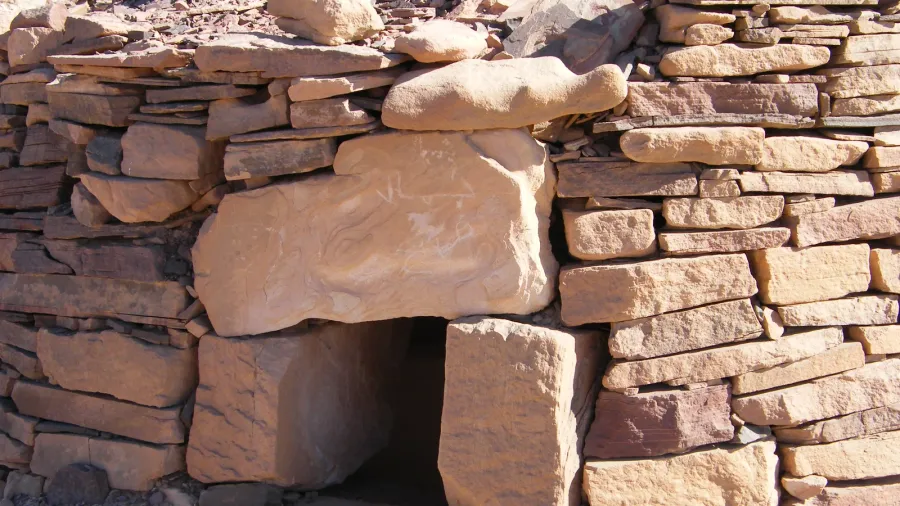
 Figure 1: Circular drystone architecture of a namus tomb standing in the Sinai Desert.
Architecture of the circular tombs
Nawamis are uniform in their construction. Builders gathered unworked sandstone slabs from local outcrops, stacking them without mortar in concentric courses that gently tilt inward. Each tower measures between two and two and a half meters in height, with a base diameter spanning three to six meters. As the drystone rings rise, they narrow toward a corbelled roof sealed by large flat capstones, forming a domed interior chamber.
Every intact namus features an entrance opening facing west or southwest. The low square doorways rarely exceed one meter in height, requiring visitors to crawl inside. Scholars note that this directional orientation links to the setting sun, an astronomical alignment shared by several prehistoric cultures across North Africa and the Levant. The western orientation associated the setting of celestial bodies with the passage of the dead into an ancestral world.
 Figure 2: Beehive tomb complexes in Oman demonstrating regional bronze-age funerary traditions.
Dating the Chalcolithic chambers
Excavations inside the best preserved cluster at Hdhabat Chajaj, located along the route between Dahab and Saint Catherine, yielded skeletal remains from multiple individuals deposited over generations. Radiocarbon analysis of bone collagen places these burials between the late fifth and fourth millennia BCE. Grave goods recovered from the floor sediments include carnelian beads originating from the Eastern Desert, shells imported from the Red Sea, and bifacial flint tools characteristic of Timnian pastoralist groups.
A central debate among archaeologists involves the chronological relationship between the tombs and the skeletons inside them. Several researchers argue that the sandstone structures may have been erected centuries after the earliest human remains were buried, functioning as secondary ossuaries where migratory clans reinterred ancestral bones. Luminescence dating applied to the sandstone blocks suggests ongoing maintenance and architectural additions extending into the Early Bronze Age, proving that these remote desert coordinates remained ceremonial waypoints for millennia.
 Figure 3: Jebel Ruwaik tower tomb in Yemen reflecting parallel southern Arabian burial architecture.
Funerary networks across the Red Sea
While the Sinai nawamis represent the most concentrated cluster in Egypt, identical architectural forms exist across the southern perimeter of the Arabian Peninsula. In Oman, circular drystone beehive tombs at Bat, Al-Khutm, and Al-Ayn mirror the corbelled construction techniques of the Sinai towers. Similar megalithic tower tombs stand at Jebel Ruwaik in Yemen, demonstrating an expansive regional tradition of stone burial markers that spanned ancient maritime trade corridors.
These shared structural forms indicate that Sinai functioned as an active cultural corridor between the Nile Valley and the Levant. Nomadic groups moved through seasonal grazing circuits, carrying raw copper, sea shells, and stone tools between the continents. The circular tombs served as visible territorial markers for pastoral clans navigating the harsh desert, anchoring lineage claims in stone while mapping migratory routes across the crossroads of Africa and Asia.