· History & Civilization · 4 min read ·
Why the Homeric Harbor City of Gonoessa Vanished From the Greek Coastline
Mentioned in the Iliad as a fleet stronghold for the Trojan War, the ancient Greek citadel of Gonoessa vanished completely from the Peloponnese.
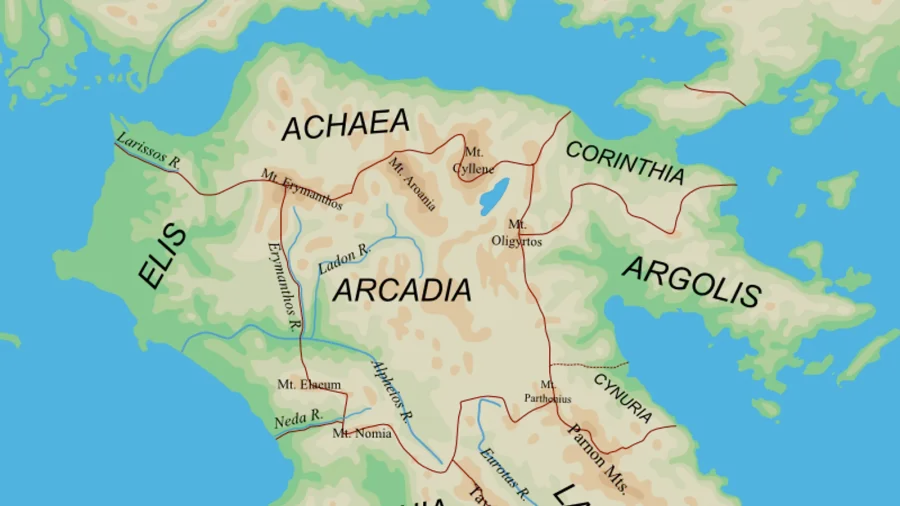
In the second book of the Iliad, within the sprawling Bronze Age census known as the Catalogue of Ships, Homer pauses along the storm-battered northern coast of the Peloponnese. Amid the dominions governed by Agamemnon, the epic poem names “high Gonoessa”—a windswept maritime fortress perched above the Gulf of Corinth that sent bronze-clad warriors and part of a hundred-ship armada across the Aegean to besiege Troy. Yet if you walk the rocky limestone headlands of northern Corinthia today, searching for the foundations that launched those black-hulled galleys, you will find only wind-sheared olive groves and empty goat tracks. Gonoessa has completely disappeared.
The Bronze Age Stronghold of the Northern Peloponnese
During the late Mycenaean period, the coastal strip between Sicyon and Achaea formed a vital maritime buffer where steep mountain ridges plunge straight into the Gulf of Corinth. According to ancient commentators, Gonoessa served as a fortified satellite outpost and harbor for the mountaintop city-state of Pellene. Early Pelasgian seafarers who migrated across the Aegean were credited with constructing the original acropolis, taking advantage of a high promontory that provided visual control over the narrow sea lanes leading toward the Isthmus of Corinth.
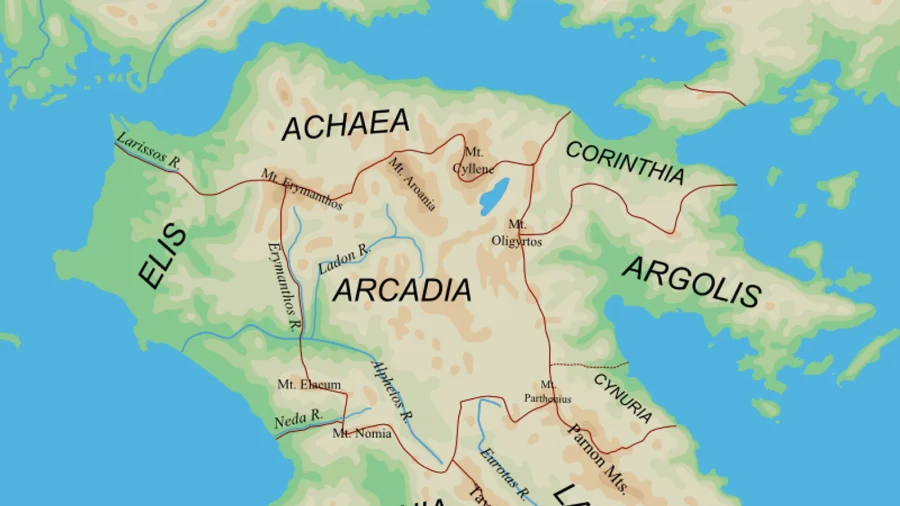
 Figure 1: Ancient Achaea extended along the northern coast of the Peloponnese, where fortified poleis like Pellene and coastal ports guarded the maritime approaches to the Gulf of Corinth.
When Agamemnon marshaled the Greek forces for the war against Priam, the warriors of Gonoessa banded together with the men of Pellene and Hyperesia. Combined, their flotilla numbered one hundred warships, representing one of the largest naval contingents listed in the Homeric muster. The epithet Homer bestowed upon it, aipeine, meaning “lofty” or “precipitous”, implied a citadel clinging to a sheer crag, designed to repel coastal raiders and monitor maritime traffic.
The Scribe’s Pen and the Mystery of Donoussa
By the second century AD, when the Greek geographer Pausanias traveled through the Peloponnese compiling his landmark Description of Greece, the town had already drifted into antiquity and confusion. Pausanias recorded that the site was originally called Donoussa (or Donussa), a fortified stronghold held at various periods by the Sicyonians and the citizens of Pellene.
 Figure 2: The precipitous limestone slopes of the northern Peloponnese drop abruptly toward the Corinthian Gulf, creating naturally defensible crags ideal for Homeric citadels.
According to local tradition, the change in name stemmed from the Athenian tyrant Peisistratus in the sixth century BC. When Peisistratus commissioned the definitive editorial consolidation of the Homeric epics, scholars alleged that the name was altered from Donoussa to Gonoëssa, either through a dialectal shift or to align oral hexameter with Athenian textual authority. Regardless of its naming, Pausanias noted that the fortification stood somewhere between Aegeira and Pellene, yet he offered no description of standing temples, crowded anchorages, or active garrisons. The living city was already a memory.
Geological Cataclysms and the Elusive Search
For modern classical archaeologists, Gonoessa remains one of the most frustrating enigmas in Mediterranean cartography. Unlike Troy, Mycenae, or Knossos, where nineteenth-century excavators dug into the earth and matched physical strata to epic poetry, Gonoessa has yielded no inscribed stones, no cyclopean harbor piers, and no securely identified pottery deposits.
The primary culprit may lie in the extreme seismic dynamics of the Gulf of Corinth rift. As one of Europe’s most tectonically active extensional zones, the northern Peloponnesian coast has suffered catastrophic earthquakes, coastal subsidence, and submarine landslides for millennia. In 373 BC, the neighboring Achaean city of Helike was dropped directly beneath the waves overnight by a violent seabed rupture. Similar seismic upheavals along the coastal shelf near modern Derveni and Xylokastro could easily have collapsed Gonoessa’s port installations or sent its cliffside terraces tumbling into the gulf.
A Ghost Fleet Anchored in Hexameter
Today, the legacy of Gonoessa exists almost entirely in the cadences of ancient verse. Nineteenth-century British traveler William Martin Leake attempted to fix its site on the jagged peak of Koryphi, while others have pointed to unexcavated rubble mounds near the village of Gonoussa in Corinthia. Yet without definitive archaeological strata, the Homeric harbor remains untamed by modern maps. Like the mythical heroes who boarded its black galleys, the high citadel of Gonoessa sailed into the shadows of Bronze Age memory, leaving behind only an epithet and the mystery of its vanished stone.