· Cities & Capitals · 4 min read ·
Karachi's Lost Mandate: Pakistan's Forgotten First Federal Capital
Between 1948 and 1959, Karachi served as Pakistan's contested first federal enclave before political turbulence moved the sovereign capital north.
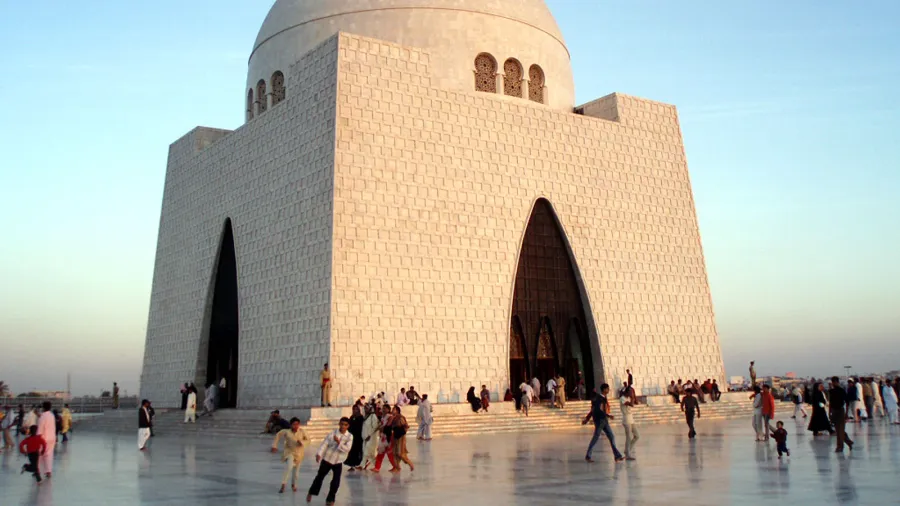
In August 1947, the partition of the Indian subcontinent brought forth the independent dominion of Pakistan, faced immediately with the challenge of governing a nation divided into two geographic wings separated by fifteen hundred kilometers of foreign territory. The federal government selected Karachi, an expanding Arabian Sea port city at 24.8607° N, 67.0011° E, to serve as its provisional seat of government. Lacking purpose-built federal offices, ministries rapidly commandeered municipal buildings, provincial legislature halls, and military barracks across the city.
On July 23, 1948, Governor-General Muhammad Ali Jinnah issued the Pakistan (Establishment of the Federal Capital) Order, formally excising 2,103 square kilometers from the Province of Sindh. The decree created an administratively separate Federal Capital Territory directly under national control, guaranteeing that the central government exercised exclusive jurisdiction over its administrative institutions, transit gateways, and customs collection facilities.
This territorial reorganization provoked sharp resistance from provincial leaders across Sindh. Local politicians argued that the unilateral severance of Karachi stripped the province of its historical economic hub and administrative center, including the newly built Sindh Assembly Building on Court Road. Despite vocal protests, the central administration maintained that a neutral federal enclave was indispensable for national governance and sovereign stability.
 Figure 1: Karachi Cantonment Railway Station, completed in 1898 along Doctor Daud Pota Road, served as the primary overland transit hub linking the Federal Capital Territory to the Indus basin. Photo: A.Savin, Wikimedia Commons (Free Art License).
Geographically, the Federal Capital Territory spanned arid coastal plains bounded by hills to the north and west, the Indus River delta to the east, and the Arabian Sea to the south. The territory bordered the province of Sindh to the northeast and the princely state of Las Bela to the northwest, with seasonal flows of the Layari and Malir rivers cutting through the municipal perimeter.
Between 1947 and 1951, the enclave experienced a profound demographic transformation. Karachi’s pre-partition population of four hundred thousand residents—historically composed of Sindhi Muslims, Sindhi Hindus, Baloch communities, Parsis, and Gujarati merchants—shifted rapidly as partition triggered massive population movements. Hundreds of thousands of Urdu-speaking Muhajir refugees settled across the federal enclave, driving the metropolitan count past 1.9 million by the end of the 1950s.
Economically, the territory functioned as the sole maritime lifeline for western Pakistan. Through the Port of Karachi, the enclave processed more than ninety percent of external maritime trade, while housing the newly founded State Bank of Pakistan and the Karachi Stock Exchange. Aviation connections operated through Quaid-e-Azam International Airport and Mauripur airbase, while overland rail convoys departed northward from Karachi Cantonment and Karachi City stations.
 Figure 2: The Port of Karachi on the Arabian Sea provided the sole deep-water maritime trade corridor for West Pakistan throughout the federal enclave’s existence. Photo: King Eliot, Wikimedia Commons (CC BY-SA 4.0).
The strategic vulnerability of a coastal capital became a primary concern following the 1958 military coup led by Field Marshal Ayub Khan. Defense analysts argued that Karachi remained exposed to maritime bombardment and amphibious assault, while political leadership felt increasingly insulated from military headquarters based in Rawalpindi. In 1959, an official site-selection commission concluded that the national capital should move inland toward the Potohar Plateau.
Rawalpindi assumed the role of interim capital in 1959 while construction commenced on the master-planned federal city of Islamabad. In 1961, the Federal Capital Territory was formally dissolved and integrated into the One Unit administration of West Pakistan. When the unified provincial structure was abolished in 1970, Karachi was restored to the province of Sindh as its provincial capital, leaving behind a distinctive historical chapter as Pakistan’s original sovereign capital territory.